
Summary: Learn about range hood types, range hood installation, costs, and ventilation options. Choose the right hood, install it correctly, and avoid common mistakes to keep your kitchen clean, fresh, and comfortable.
A Complete Guide to Range Hood Installation for Homeowners
A range hood is a great addition to your kitchen, helping reduce steam, smoke, fat, heat, and airborne particles when cooking. Choosing the correct model and fit ensures you will make the most of your range hood. To fit your range hood, you need to choose the right model, determine the ventilation needs, plan where the duct will go, and ensure the unit runs safely.
If you’re replacing your old kitchen extractor fan, installing a new system, or upgrading your draining sink, it can be helpful to understand how things work so you don’t get ripped off and end up with a poorly ventilated kitchen. We’ll take you through the different types of hoods available, installation costs, ducting, and some useful tips.
A range hood needs to be the correct size, have adequate airflow, a good installation area, and a safe venting system. It is generally better to install a ducted range hood that vents air outside. If this is not possible, a ductless range hood can be used.
What Is a Range Hood and Why Does Your Kitchen Need One?
A range hood, also known as a kitchen hood vent, is a ventilation device installed above a cooking area. It contains a fan and filter system that removes cooking fumes, grease, smoke, and odours.
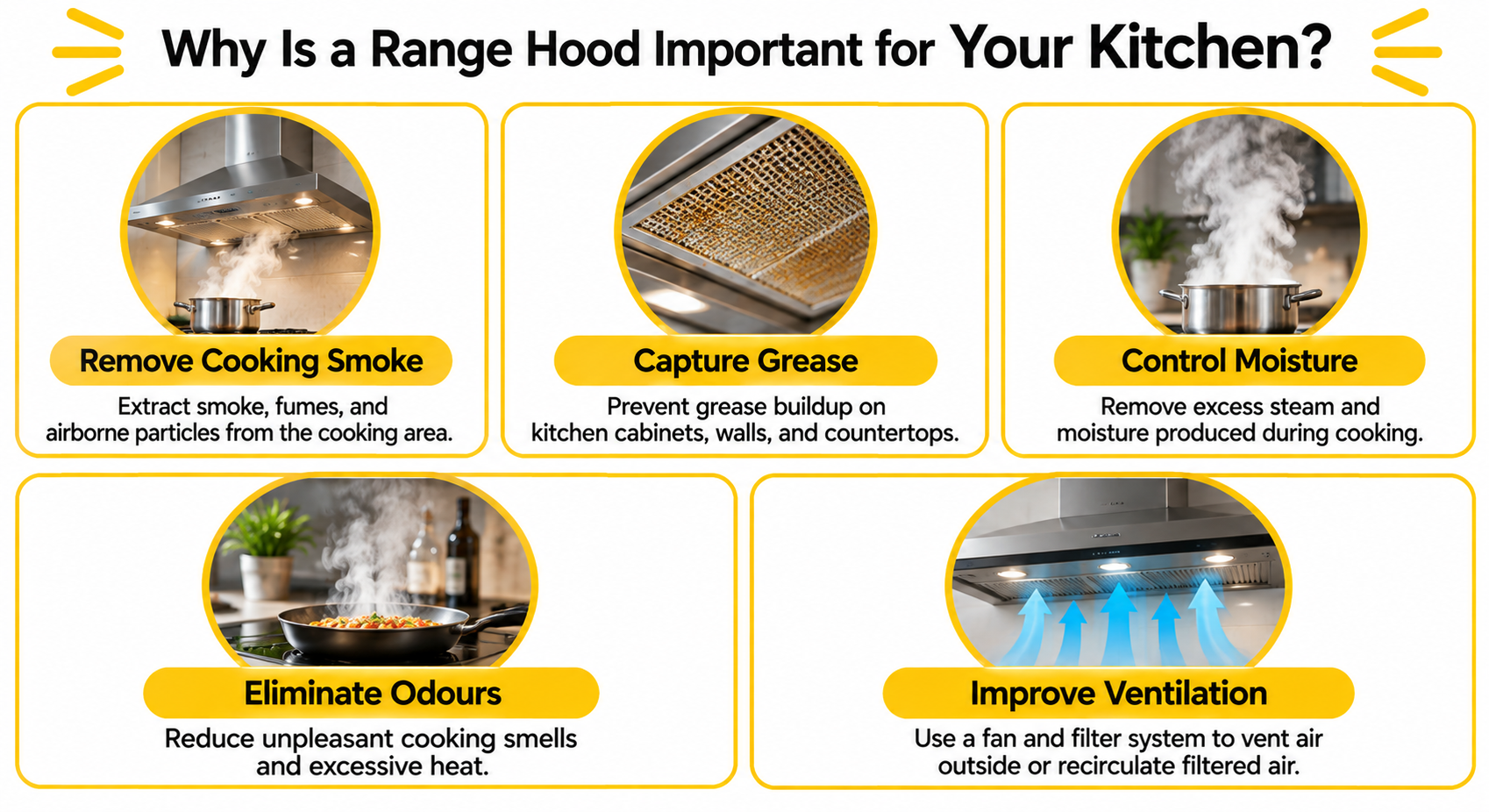
Depending on the type, a kitchen hood vent either releases the air outside or filters and recirculates it back into the kitchen.
A properly selected kitchen hood can:
- Reduce cooking pollution by removing particles and combustion by-products from the air
- Catch grease so you won’t get any buildup in your cabinets, walls, and counters
- Remove moisture to help remove cooking steam
- Lessens unpleasant cooking smells and excessive heating.
Cook with a properly installed hood vent, and consider professional hood vent installation to ensure it vents air outside whenever possible.
What Are the Different Types of Range Hoods?
Choosing the right range hood depends on your kitchen design, cabinets, cooking habits, and available ventilation.
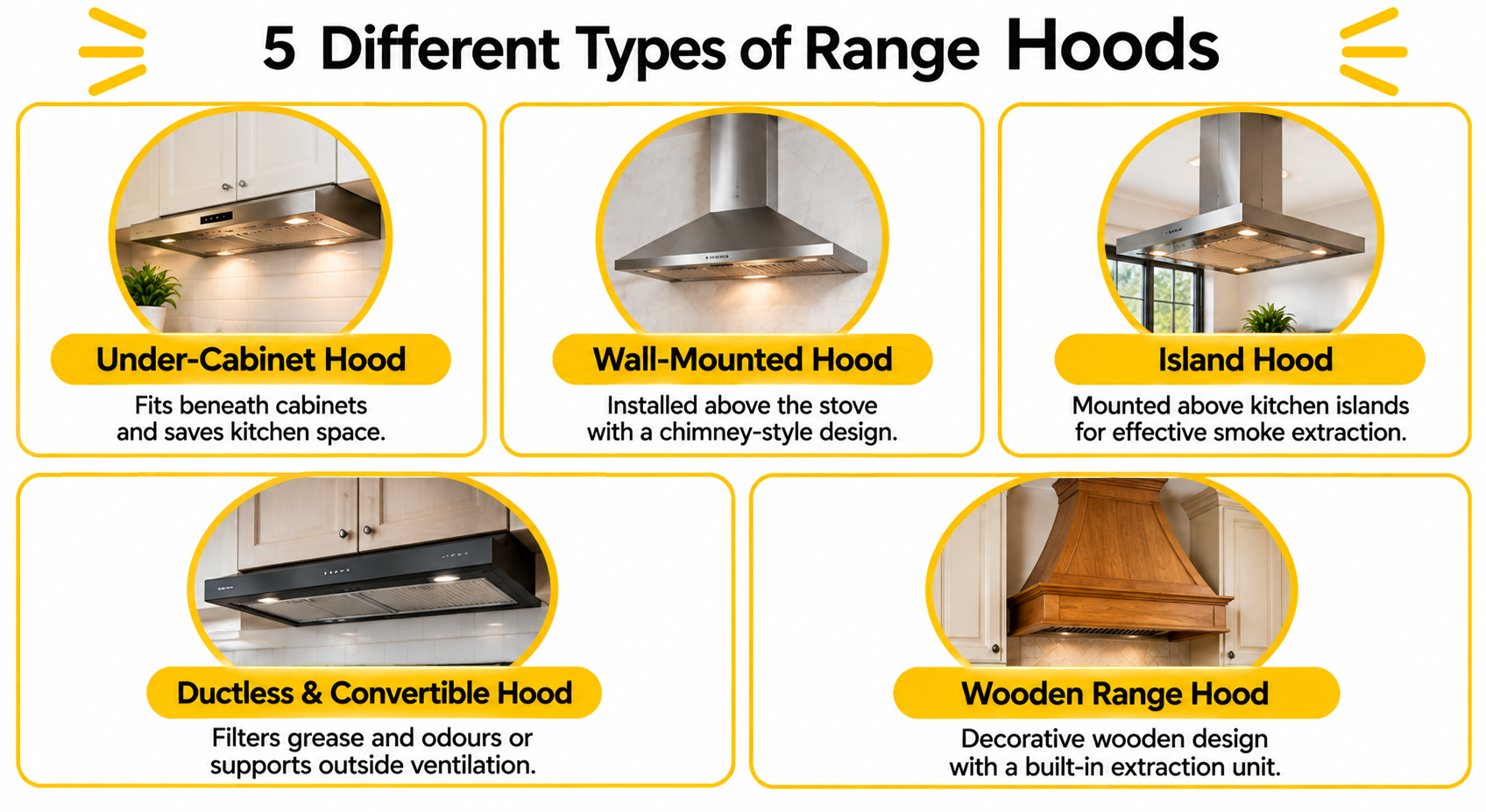 Understanding the different range hood types can help you choose the best option for your kitchen and ventilation needs.
1. Under-Cabinet Range Hood
Under-cabinet range hoods are mounted below an existing cabinet. This can be a good option if your kitchen has overhead storage that you wish to keep.
Ducted and ductless models are available. Before choosing a hood, check the available cabinet space, hood dimensions, and range hood duct installation requirements, including where the duct will vent outside.
2. Wall-Mounted Range Hood
Wall-mounted range hoods are attached to the wall above the stovetop. They typically have a visible chimney-style canopy. These are ideal for kitchens with no cabinetry over the cooking area.
3. Island Range Hood
Island hoods are mounted to the ceiling above your cooking area on an island. As there are no side walls to help draw up the smoke, it is very important that you choose the right size and powerful extractor.
It may be necessary to strengthen your ceiling, do some electrical work, and have a duct installed within your ceiling/roof.
4. Ductless and Convertible Range Hoods
A ductless hood will have particle and odor reduction filters using grease and charcoal to trap the grease and reduce the odor. However, as it isn’t venting outside into the atmosphere, it won’t have the same exhausting power.
Depending on what the manufacturer provides, you may install your range hood to work with ducting or be a recirculating model.
5. Wooden Range Hood
A wooden hood is mainly a decorative feature that complements your kitchen cabinets and overall kitchen renovation design. During kitchen range hood installation, a separate extraction unit is usually fitted inside the wooden enclosure to remove cooking smoke, grease, and odors.
Ensure the insert is compatible with your housing and that you follow all clearance and fire safety requirements.
How Much Does Range Hood Installation Cost?
The cost of professional range hood installation typically ranges from $650 to $2,500, depending on the range hood type, size, and specifications. According to the Angi Cost Guide, the national average installation cost was around $1,750 as of September 2026.
| Installation requirement | Potential cost impact |
| Replacing an existing hood | Usually less expensive |
| Installing an under-cabinet hood | Depends on existing connections |
| Wall-mounted installation | May require mounting and duct adjustments |
| Island hood installation | May involve ceiling and electrical work |
| New ductwork | Increases material and labor costs |
| Electrical modifications | May require a qualified electrician |
What Factors Affect the Installation Price?
Several things influence the final estimate:
- Wall, island, under-cabinet & bespoke wood hood installations
- Creating a new ducting system through the structure (wall, ceiling, or roof) will incur extra costs.
- New electrical installation costs may also be incurred from new wiring, sockets, or re-wiring of circuits.
- Cabinet damage/alteration, drywall repair, and ceiling alterations can also impact the budget.
- Labour costs depend on the local area and complexity of the work to be done by professionals.
To get a more accurate price, break it down into costs for equipment, labour, ducting material, wiring, and repairs. You should always get a breakdown of costs.
What Should You Consider Before Installing a Range Hood?
Before installing a range hood, make sure you check a few important things to ensure it fits properly, works efficiently, and provides proper ventilation in your kitchen.
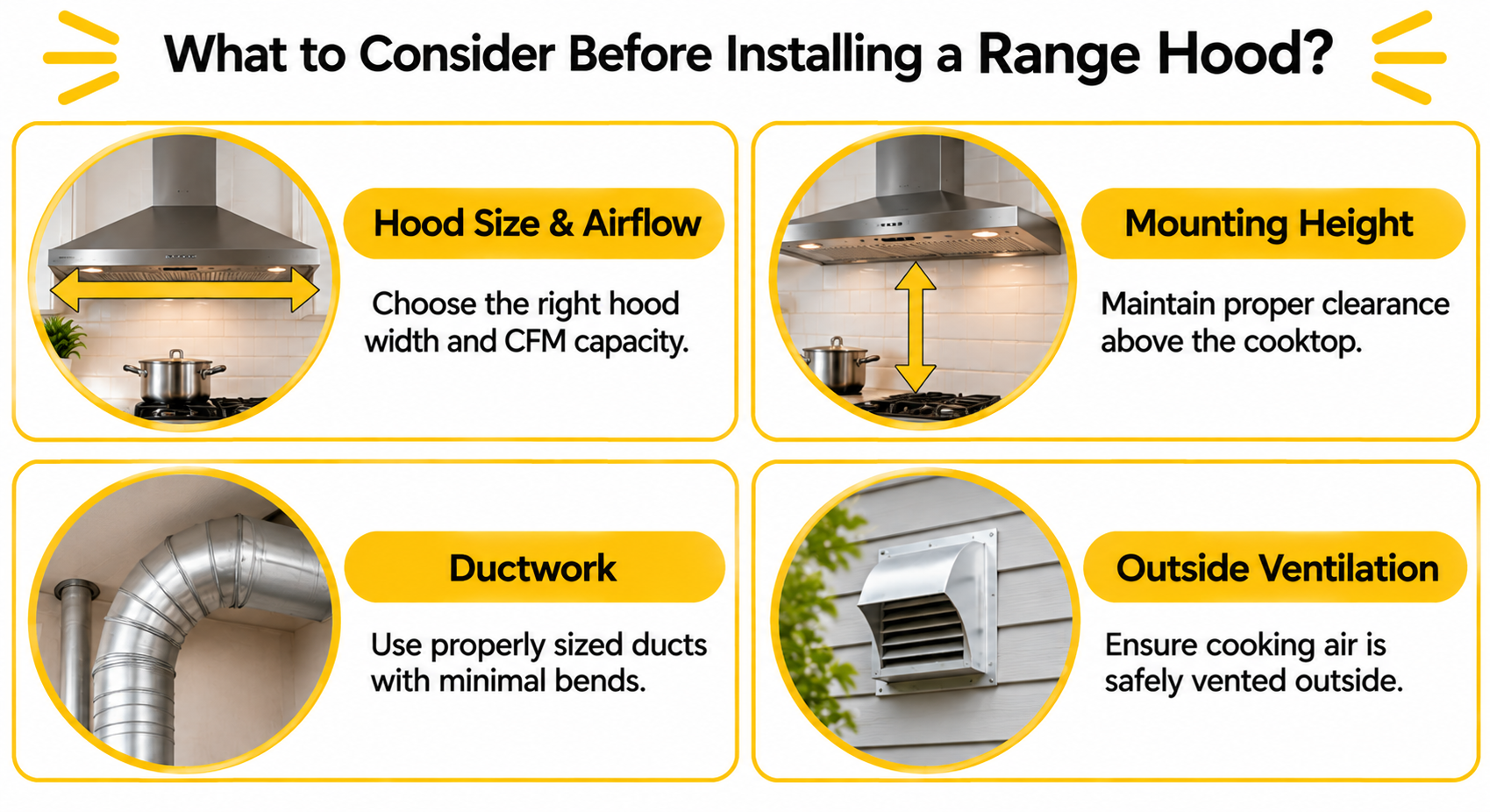 Hood Size and Airflow Capacity
The size of your hood will generally need to be at least as large as your cooking area. You’ll often see 24″, 30″, and 36″ sizes.
Airflow is measured in CFM (Cubic Feet per Minute), and you’ll need the right-sized one for your cooking appliance, hood style, duct run, and manufacturer’s recommendations. Having a higher CFM rating will not mean it performs any better if the ductwork is badly designed.
Mounting Height and Clearance
The right distance between your cooktop and your range hood will help ensure your range is safe to use and performs well. In the Broan-NuTone installation guide, for example, they recommend a minimum height of 20″ from an electric range and 24″ from a gas range. The maximum height should be 30″. Always follow your appliance instructions.
Ductwork and Ventilation Route
Ensure there is appropriate routing of the ducted hood to the outside wall or roof. Avoid long duct lengths, excessive bends, and undersized ducts that may affect airflow.
All domestic cooking appliances must vent to the outside using an airtight duct with a smooth inner surface and a back draft damper. Duct must not vent into an attic or crawlspace. Check your local code adoption and requirements.
How to Install a Range Hood: Step-by-Step Process
This will depend on the type of appliance you are installing; however, most Kitchen Range Hoods will require the following steps:
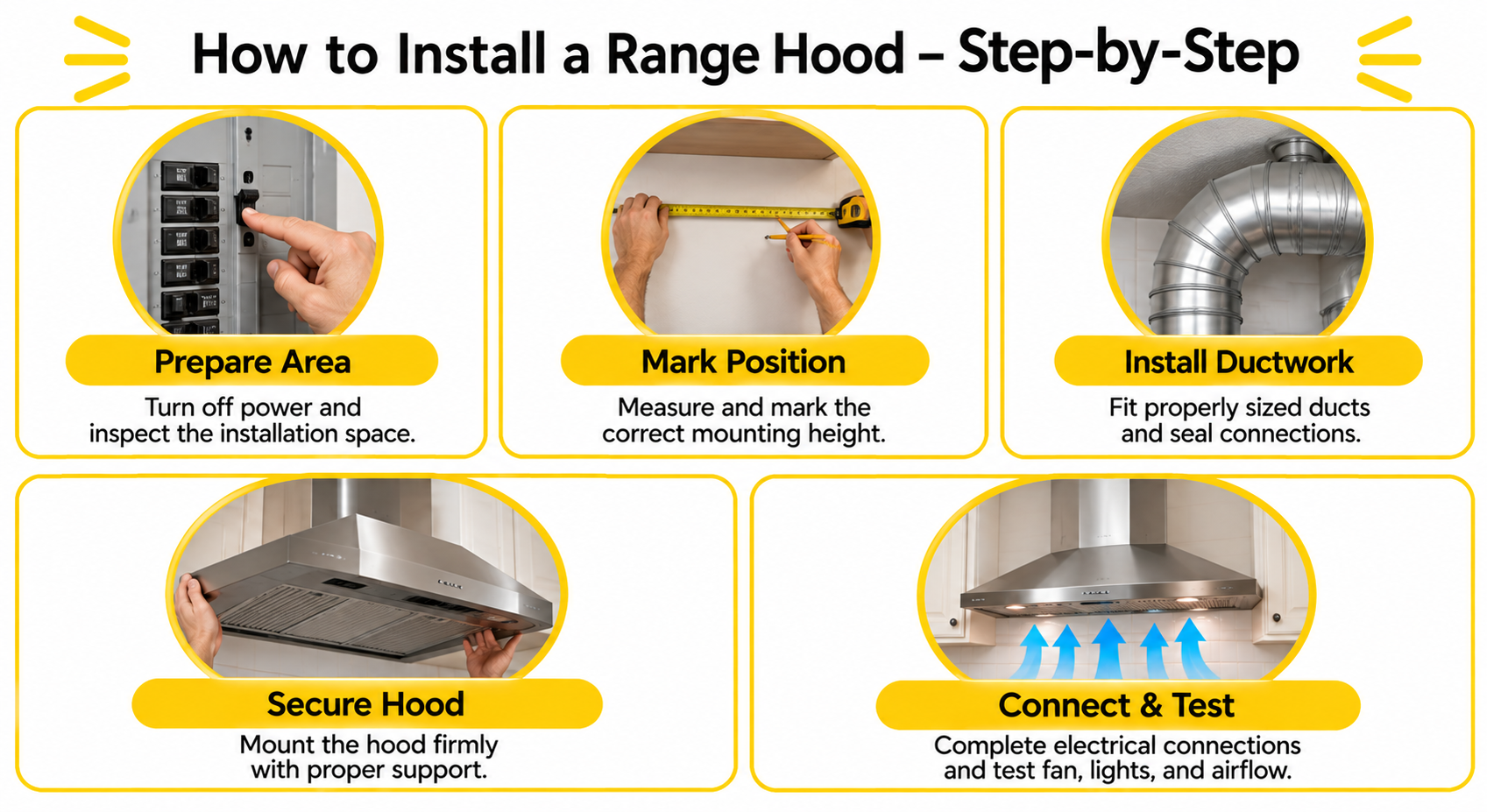 1. Prepare the Installation Area
Turn off the relevant circuit. If applicable, remove the old hood. Inspect the area where your hood will go and make sure it will fit.
2. Mark the Mounting Position
Use a tape measure to measure up to the correct height and mark your mounting points using the template provided by the manufacturer. Ensure your hood will be level and will fit properly with your cooking surface.
3. Plan and Install the Ductwork
Ducted: Plan the shortest distance for the duct to exit outside. Install correctly sized ducting with fittings and seal joints with suitable sealant.
4. Secure the Range Hood
Secure brackets or supports to suitable structures. Lift the hood into position and follow the manufacturer’s instructions to secure. Larger units such as Island and Custom may need extra support.
5. Complete Electrical Connections
Wiring: Connect the appliance according to the manufacturer’s wiring instructions and relevant electrical regulations. If you have to install new wiring, change circuits, or are unsure of connections, use a qualified electrician.
6. Test the Ventilation System
Switch power back on and test fan operation at various speeds. Check bulbs, controls, airflow, and the external damper. Unusual noise and duct connections should also be checked.
What Are Common Range Hood Installation Mistakes?
Even a high-quality appliance may have poor performance due to venting issues.
- Too small a hood: The hood may not have enough coverage to capture all emissions from the cooking area.
- Incorrect duct sizing: Too small or wrong-size ducts can restrict airflow.
- Too many elbows: Too many elbows create more resistance to the airflow.
- Incorrect installation: Incorrect installation can affect how well it works and cause safety issues.
- Air being exhausted into the building: Ductwork should never be terminated into attics, ceilings, or crawl spaces.
- Make-up air: Strong extraction can cause negative pressure within your home and cause backdrafting from combustion appliances.
The potential carbon monoxide risk from backdrafting is highlighted by the EPA(Environmental Protection Agency); therefore, good capacity ventilation systems should be considered to ensure correct makeup air and safe operation.
How Can You Maintain Your Range Hood After Installation?
Maintain your ventilation equipment regularly. Ensure any removable grease filters are washed regularly as specified by the manufacturer.
- Change the charcoal filters when necessary.
- Clean the external parts of your hood and any internal parts that are accessible.
- Make sure that the fan, controls, and light are all working correctly.
- Check that any accessible joints in the ductwork and external vents are not blocked.
A clean filter will improve airflow. Do not operate your hood if the filters are damaged, missing, or fitted incorrectly.
ProHandymanNow: Support for Kitchen and Home Installation Projects
The fitting of a range hood can be an involved process with many factors to consider, including:
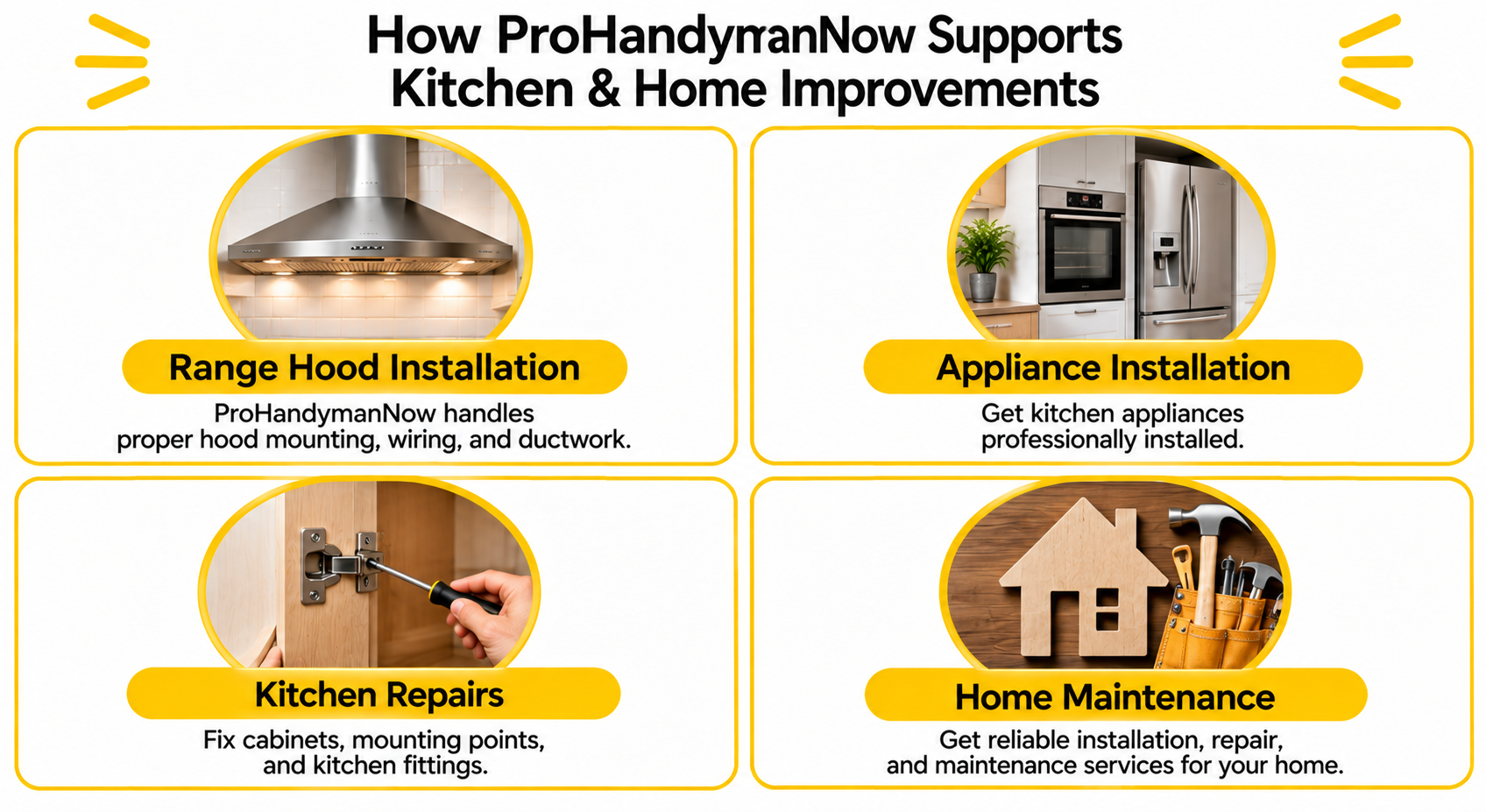 Where the hood will be mounted, how it will be wired, what ducting will be used, and how it integrates with your kitchen.
ProHandymanNow offers a wide range of home installation, repair, and maintenance services. We offer appliance installation and general repairs that will help any homeowner looking to improve their home.
Other Related Home Improvement Services
In addition to ventilation, there are many other interrelated aspects to improve your kitchen. Depending on your requirements, you may require:
- Installation of Appliances
- Basic repairs to mounting points, cabinets, and any related issues.
- Maintenance of kitchen fittings.
- Coordinating small-scale installation and repair requirements throughout the home.
Explore our blog for more practical tips, helpful guides, and expert advice on home improvements, repairs, and regular maintenance.
Conclusion
As well as selecting the right equipment, it is important that the airflow, mounting clearance, ducting size, and electrical connections are all correctly installed. A correctly installed system will help manage cooking emissions, oils, and smells whilst improving comfort in your kitchen.
Before purchasing a hood, evaluate your kitchen layout and ventilation options. If the project requires new ductwork, electrical modifications, or structural changes, consider professional installation rather than risking an improper setup.
Need help with range hood installation or kitchen repairs? Contact us today to discuss your project and get reliable support for your home improvement needs.
FAQs
How long does it take to install a range hood?
An average installation will take you a few hours, but if you need new ducting or some alterations in your kitchen, it could take longer.
Can you install a range hood without ductwork?
Yes, they have filters to catch the grease and cooking smells, and then they just recycle the air back into your kitchen.
Does a range hood need to vent outside?
Yes. Ducted range hoods should vent air outside, while ductless models use filters to clean and recirculate air when outdoor ventilation isn't practical.
continue reading
Related Posts

Summary: Office cabinets provide useful storage for documents, supplies, and

Blog Summary: When the proper sizing and style are chosen,

Summary: Choosing the best washer and dryer starts with your