
Summary: Office cabinets provide useful storage for documents, supplies, and daily essentials while keeping the workspace neat and organized. Professional installation, assembly, and repair services help businesses use office space better and keep their cabinets in good working condition.
A Complete Guide to Office Cabinets: Installation, Assembly, and Repair Solutions
Office cabinets are great for storing documents, supplies, and equipment. Choosing the right cabinets will allow businesses to get the most out of their space. If cabinets are assembled, installed, and maintained properly, they will have long durability.
This guide will help you select the right cabinet for your needs, whether you are looking for new storage ideas, assembly of furniture, or fixing cabinets. It explains cabinet types, materials, and styles, how to install them, and common issues.
Using office cabinets makes it easier to organise your documents, equipment, and supplies. Using the correct materials, design, and storage options, and ensuring they are fitted correctly and promptly, will ensure you have a practical office.
What Are Office Cabinets and Why Are They Important?
An office cabinet is a piece of furniture used to store documents, supplies, equipment, and personal items.
 Cabinets for office use come in a variety of sizes, materials, and designs to suit different storage needs.
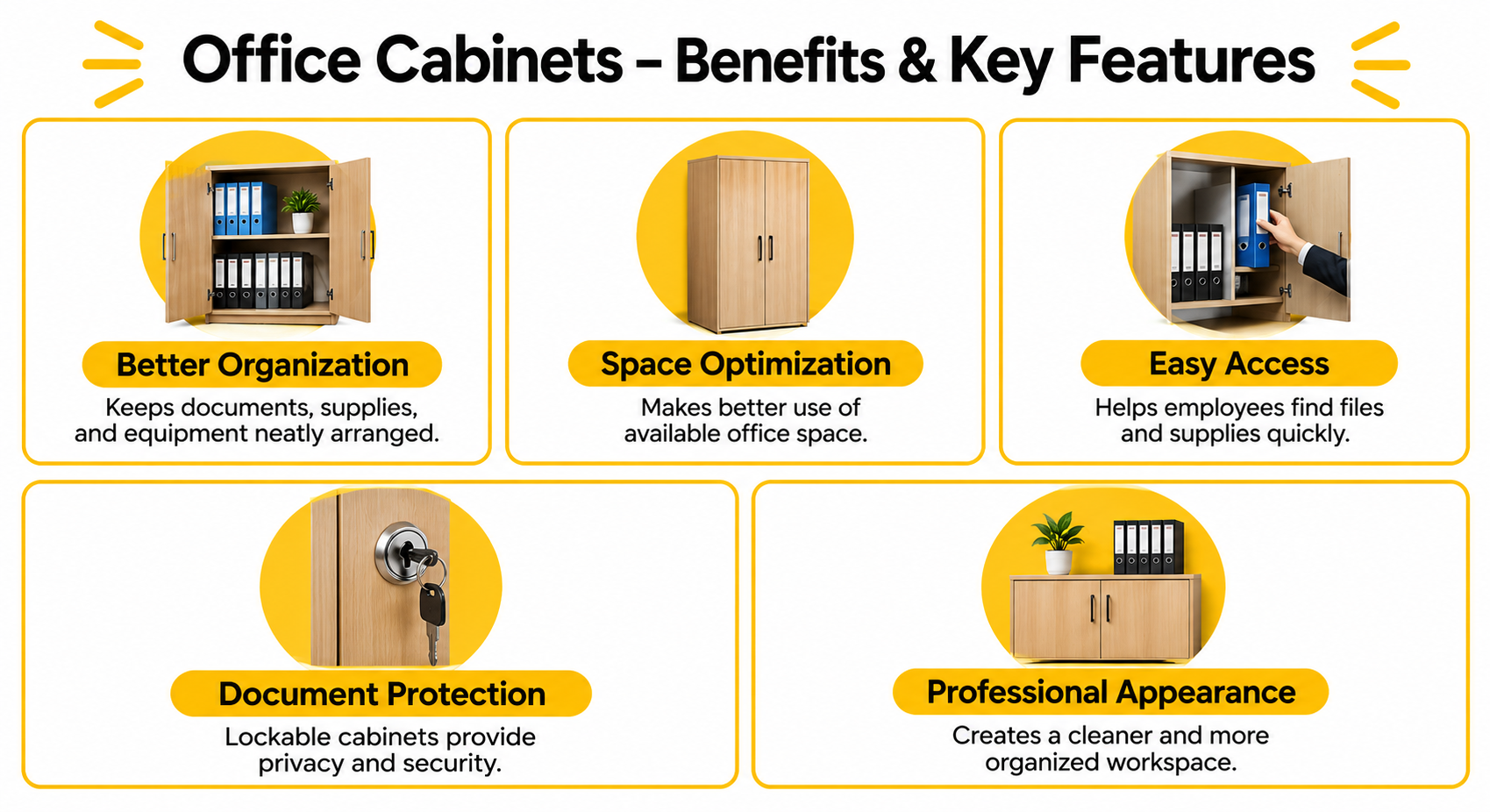
A well-planned office storage cabinet offers several benefits:
- Better organization: Keeps files, stationery, and supplies in designated spaces.
- Improved space usage: Makes use of vertical and unused areas without overcrowding the office.
- Easy access: Helps employees find frequently used documents and equipment quickly.
- Document protection: Cabinets with doors and locks provide additional privacy and protection.
- Professional appearance: Matching office furniture creates a cleaner and more consistent workspace.
For businesses that handle paperwork, equipment, and shared supplies, suitable cabinetry can make everyday tasks easier.
What Are the Different Types of Office Cabinets?
Office cabinets come in a variety of styles depending on the amount of space available, items you will be storing, and how frequently your staff will need to access them.
1. Filing Cabinets
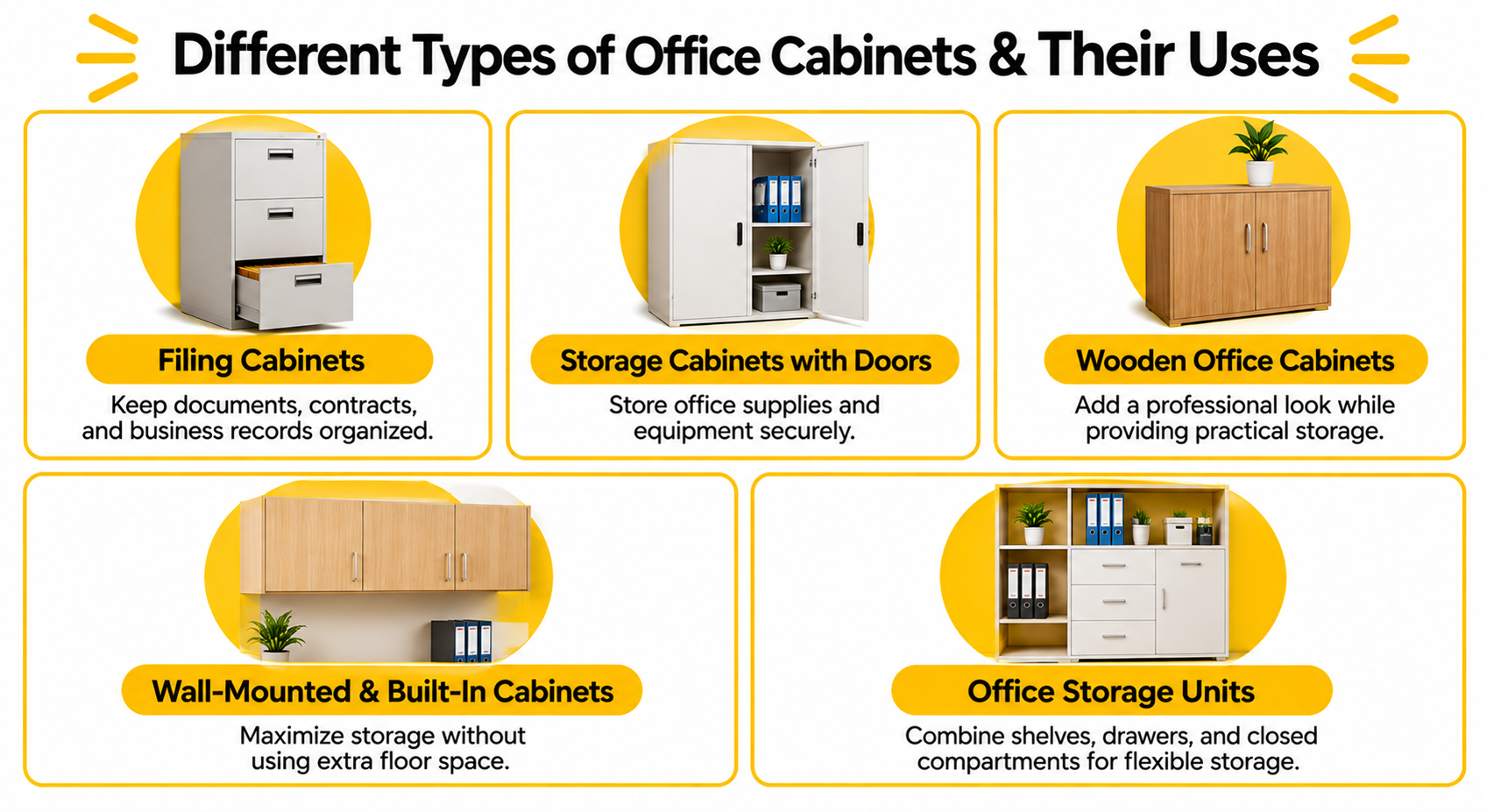
Filing cabinets are ideal for storing documents, files, contracts, and business records. These can be found in upright and lateral styles.
- Vertical filing cabinets: Use less floor space and have deep drawers for organizing documents.
- Lateral filing cabinets: Offer wider drawers that can hold more files and provide easier access across a wider storage area.
- Mobile filing cabinets: Compact units, often fitted with wheels, that can move around workstations.
These options work well for offices that regularly handle paperwork and need organized document storage.
2. Storage Cabinets with Doors
Office cabinets that have doors can be used to store supplies, equipment, and sensitive paperwork in a neat manner. There may also be adjustable shelves, locks, drawers, and sections available.
3. Wooden Office Cabinets
Wooden office cabinets will give your office a warm and professional feel. They can be used to store books, paperwork, decorative items, and supplies. They are available in a variety of finishes such as solid wood, engineered wood, and veneer.
4. Wall-Mounted and Built-In Cabinets
Vertical wall-mounted units can also increase your storage options whilst keeping your floor space free. These are great for small office spaces as well as workstations. Built-in storage helps make the most of your available areas such as corners, walls, and underneath workspaces, making storage more organised.
5. Office Storage Units and Storage Cabinets
They are often located behind desks in reception areas or meeting rooms. Open shelving, drawers, and closed storage compartments provide versatility.
Office furniture cabinets can be a great way to store office supplies and can also help hold your printers and ornaments.
How to Choose the Right Office Cabinet Design?
When choosing a new office cabinet, you need to make sure it fits your needs, available space, and furniture. Think about what you want to use the cabinets for.
Consider Available Space
Before selecting your wooden cabinet for office use, measure the available height, width, and depth. Make sure staff can easily access the storage by keeping doorways, walkways, and drawers clear.
Taller office cabinets with doors and wall-mounted storage can be a great way to maximise space in smaller offices. Larger offices might require more than one storage unit or wider filing cabinets.
Choose the Right Material
Cabinet materials affect appearance, durability, maintenance, and overall use.
| Material | Main Features | Suitable For |
| Solid wood | Natural appearance and customizable finishes | Executive offices |
| Engineered wood | Available in different designs and finishes | General office storage |
| Metal | Practical and suitable for frequent use | Filing and supply rooms |
| Laminate | Easy to clean and available in different styles | Workstations and shared offices |
| Wood veneer | Natural wood appearance over a composite core | Reception and meeting areas |
Metal cabinets are commonly used for functional storage, while laminate and wood finishes can complement office furniture. The choice should depend on expected use and maintenance requirements.
Check Shelves, Drawers, and Locking Features
When considering the storage functions you require, adjustable shelves can be useful when storing a range of supplies. Deep drawers can provide additional storage for files and folders.
If you need to store sensitive documents, then you may want lockable doors or drawers. If multiple people will be using the cabinet, then having well-defined sections can help avoid mixing up items.
Match Cabinets with Existing Furniture
Cabinets can be used to help match your desks, workstations, reception, and other furnishings. Matching the colours and finishes will give you an identical look. Consider the overall look of the cabinets in your office to ensure it all matches up.
How Does Office Cabinet Installation Work?
Installing an office cabinet means preparing, putting it together, and making sure it is placed and attached properly. This will help to make sure that your cabinet is secure.
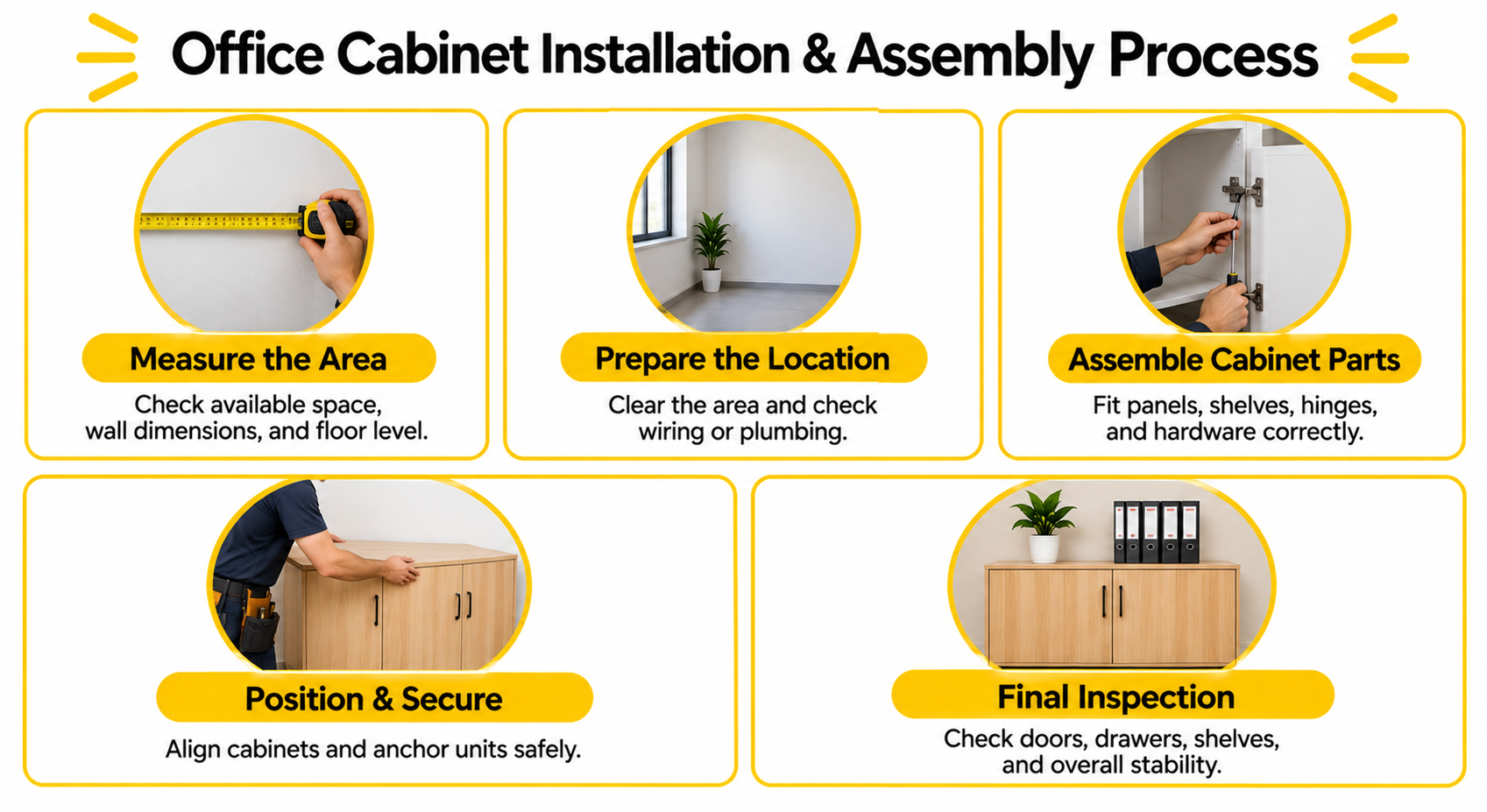
The process generally includes the following steps:
- Measure the installation area: Check available space, wall dimensions, floor level, and access points.
- Prepare the location: Clear the area and check for electrical wiring or plumbing where drilling may be required.
- Assemble the cabinet: Follow the manufacturer’s instructions and fit panels, shelves, hinges, and hardware.
- Position the cabinet: Place it in the planned location and check its alignment.
- Secure the unit: Anchor wall-mounted or tall cabinets using suitable fixings for the wall structure.
- Check functionality: Open and close doors and drawers, inspect shelf supports, and confirm that the cabinet is stable.
The Architectural Woodwork Institute (AWI) provides cabinet installation and wall anchorage guidelines to ensure secure fitting.
When Should You Hire Cabinet Installation Services?
Professional fitting can be used for larger built-in or wall-mounted units. This includes measuring, assembling, and aligning the cabinets so they are fitted securely and will not block any aisles or nearby furniture.
Office Cabinet Assembly: What Should You Know?
Assembling an office cabinet means putting together panels, hinges, drawer slides, and other parts. Check all your parts, have your instructions to hand, and sort out your hardware. Plus, gather your tools.
Pay particular attention to:
- Correct placement of cabinet panels and backboards.
- Proper fitting of hinges and drawer slides.
- Accurate alignment of doors and shelves.
- Tightening screws without damaging the material.
- Checking the stability of the assembled unit.
Improper assembly can cause doors to be out of line, shelves to be loose, drawers to stick, and cabinets to wobble. By having them assembled by a professional, you can avoid these problems, especially with large or complicated units.
What Are Common Office Cabinet Problems and How Can They Be Repaired?
Office cabinets are used often, so their doors, drawers, shelves, and finishes may start to show signs of wear. Getting small issues fixed can help keep them looking good.
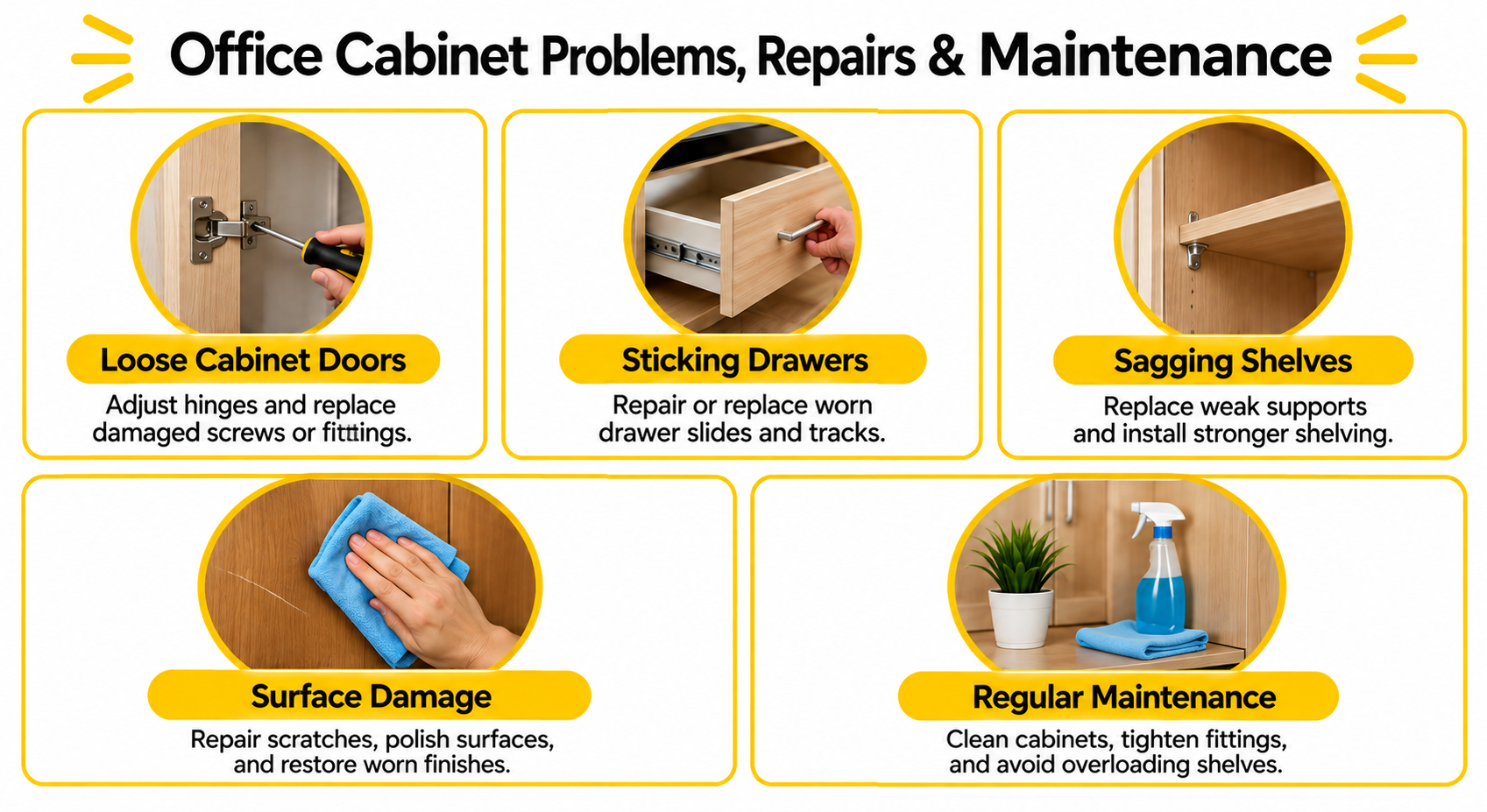
Loose or Misaligned Cabinet Doors
Cabinet doors can become loose due to hinge and screw wear. Adjusting the hinges and replacing damaged items can help.
Sticking or Damaged Drawers
Drawers can become awkward to open with worn slides, looseness, and incorrect alignment. Check the drawer tracks and replace damaged slides.
Broken or Sagging Cabinet Shelves
Shelves can droop if overloaded. Damaged supports can be replaced, shelves can be adjusted, or stronger shelves can be installed.
Scratches and Surface Damage
Wooden cabinets can become scratched and have worn finishes and small marks that can be improved by sanding, touching up, re-finishing, or using appropriate cabinet polish.
Laminate and veneer surfaces will need some extra attention. Deep scratches, swollen panels, or broken sections may need more repair work.
How Can You Maintain Office Cabinets?
A regular maintenance regime will help keep your cabinets clean and working well. Basic maintenance will help prevent unnecessary damage.
- Wipe surfaces clean with a soft cloth and the correct cleaning product.
- Don’t get them too wet. Quickly wipe up any spills.
- Tighten any loose screws on hinges and handles. Replace any damaged fixings.
- Make sure the shelves are not overloaded and regularly check the shelf supports.
- Remove dust and check that the drawers slide easily.
- Only use the correct polish.
Laminate furniture should be cleaned gently without using harsh tools or products. HON recommends checking the manufacturer’s instructions to ensure you are using the correct products for your cabinets.
When Should You Consider Custom Office Cabinet Solutions?
Custom home office cabinets are useful if you have limited space or specific storage requirements. You can choose the size, material, shelving, and finish to suit your workspace.
Custom cabinets may be useful for:
- Offices with limited or irregular wall space
- Extra shelving requirements
- Reception areas requiring matching storage
- Businesses wanting cabinets to match their interior design
- Offices requiring some form of drawer and box storage
Before starting your custom cabinet project, you should decide what you need to store, measure up your area, and decide on materials that will be suitable for the intended use.
ProHandyManNow: Office Cabinet and Furniture Solutions
ProHandyManNow provides practical solutions to help you maintain and improve everyday situations. Office cabinetry is an important part of organisation in the workplace.
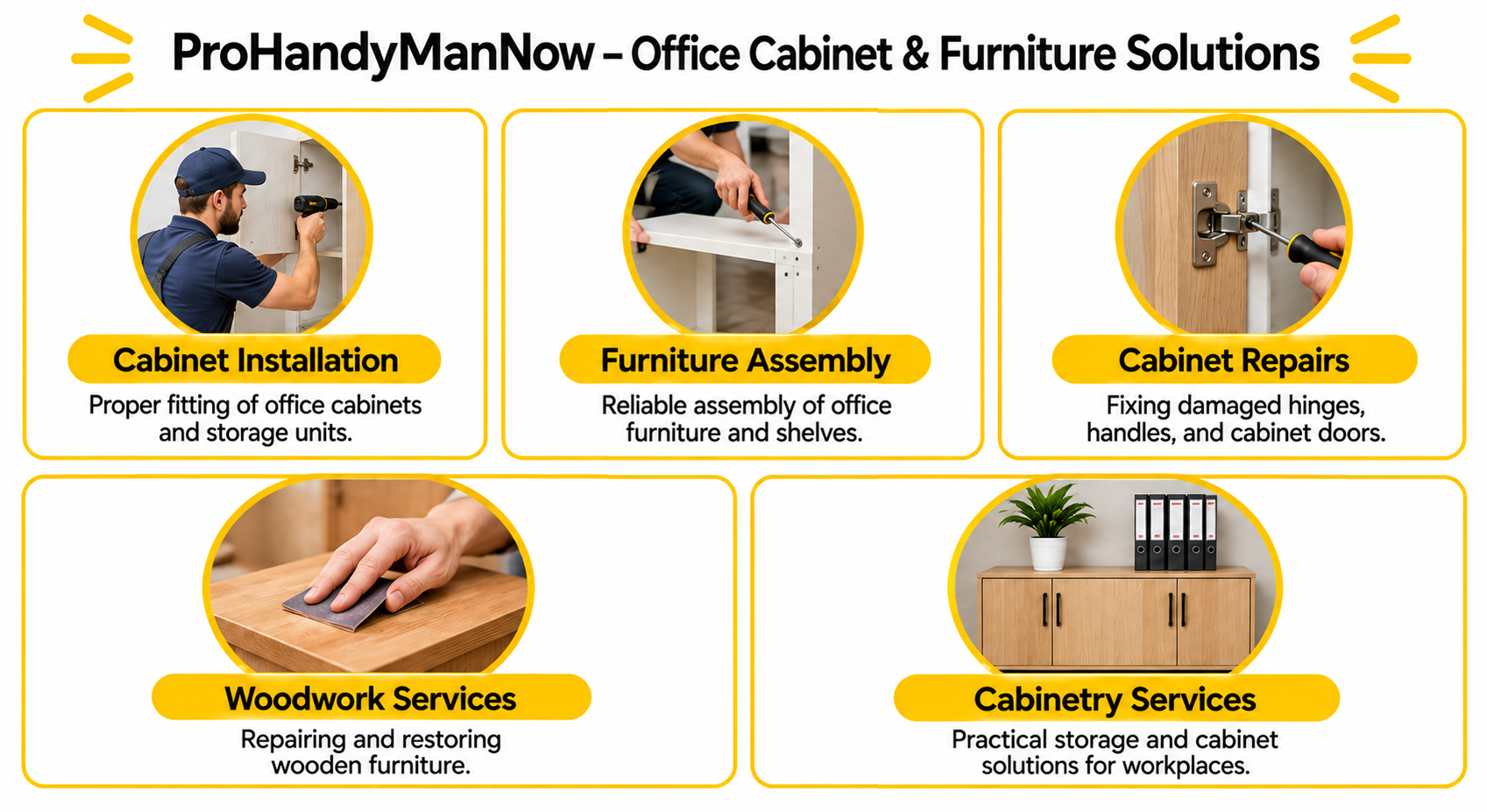
Ensuring your cabinets are put together correctly, installed, and maintained will make it easier to store everything.
Cabinet Installation and Assembly
New storage units should be installed with precision. Whether you are looking to install an individual storage unit for your office or extra storage shelves, they can be fitted and assembled correctly to make them work well.
Cabinet Repair and Woodwork
Office cabinets can suffer from issues such as broken hinges, damaged handles, worn surfaces, and misaligned doors. Cabinet repairs, cabinetry, and cabinet making can help fix these problems and restore their functionality.
For wooden furniture, appropriate polishing and refinishing can help provide a nice finish to worn surfaces.
ProHandyManNow also provides cabinetry services and a place to explore practical home and workplace improvement ideas through its blog, covering useful information about furniture, repairs, and everyday maintenance.
Conclusion
Office cabinets are an important part of any workplace. By selecting the right type, material, and design of cabinet, as well as ensuring it is installed, assembled, and repaired in a timely manner, you can ensure that your cabinets will be functional and efficient.
Selecting the right service for your new storage unit, assembly, and repairs can ensure your workspace remains practical.
Need help with your office furniture? Contact us to discuss your requirements.
FAQs
1. What type of cabinet is best for an office?
The best office cabinet depends on your storage needs. Filing cabinets suit documents, while closed cabinets store supplies and equipment. Wooden and laminate options add a professional look.
2. How much does office cabinet installation cost?
Office cabinet installation costs depend on cabinet size, material, assembly needs, location, and installation complexity. Wall-mounted and built-in cabinets may require extra preparation and fitting.
3. Can damaged office cabinets be repaired?
Yes, many office cabinets can be repaired. Common repairs include replacing hinges, fixing sliding drawers, tightening fittings, fixing shelves, and refinishing damaged wood.
continue reading
Related Posts
Blog Summary: When the proper sizing and style are chosen,

Summary: Choosing the best washer and dryer starts with your
Summary: A complete walkthrough of what it takes to set