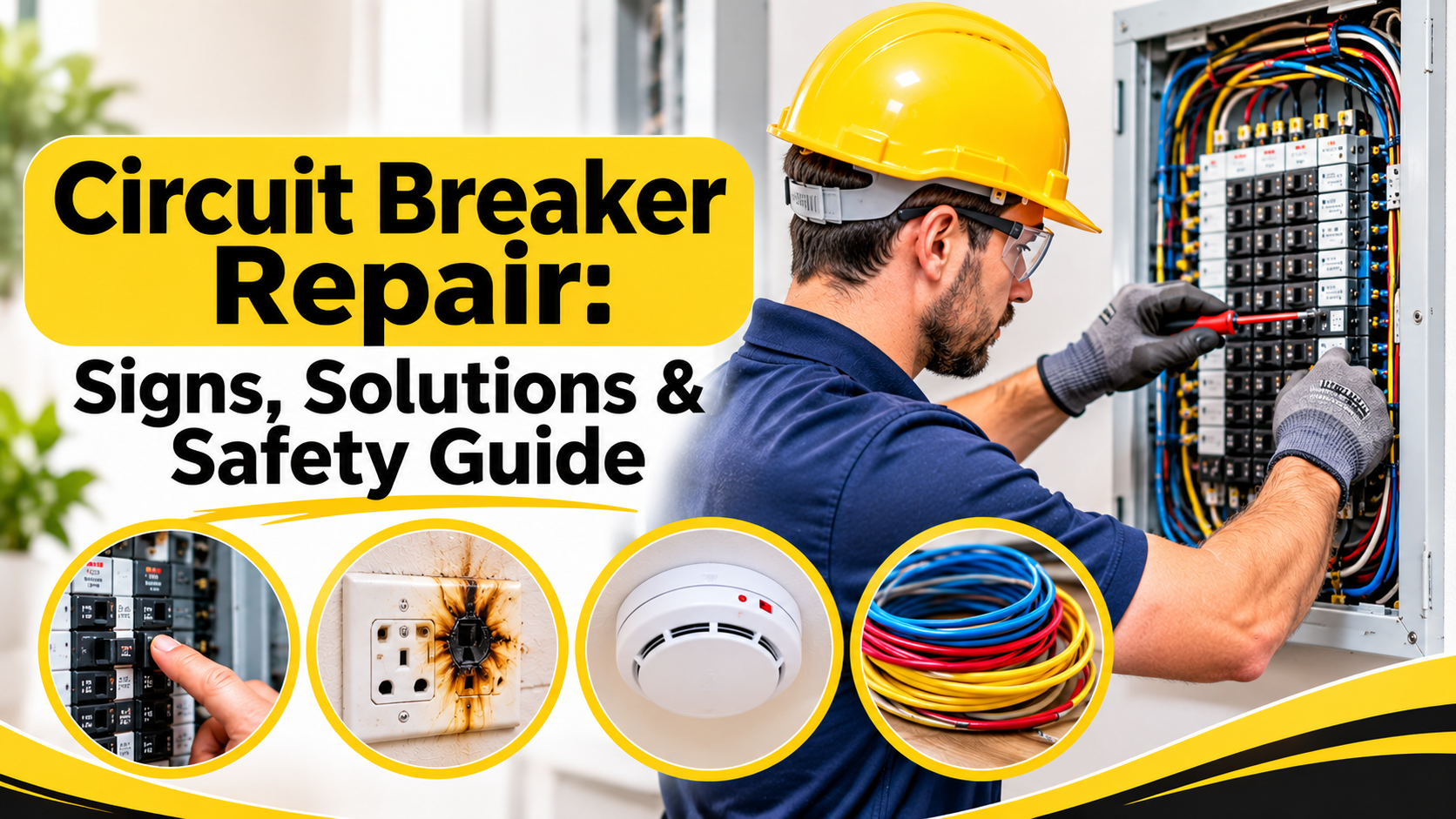
Summary: Electrical circuit breaker repair can help avoid any electrical problems within the home. In this article, we cover signs you may have a breaker issue, common problems, solutions, and top tips. Understanding how these repairs can avoid electrical risks and ensure smooth electrical operation within the home.
A Complete Guide to Circuit Breaker Repair: Signs, Solutions & Safety Guide
If a circuit breaker is causing problems in your home, such as regularly tripping, bad odours, strange noises, or loss of power, it may be necessary to have it repaired.
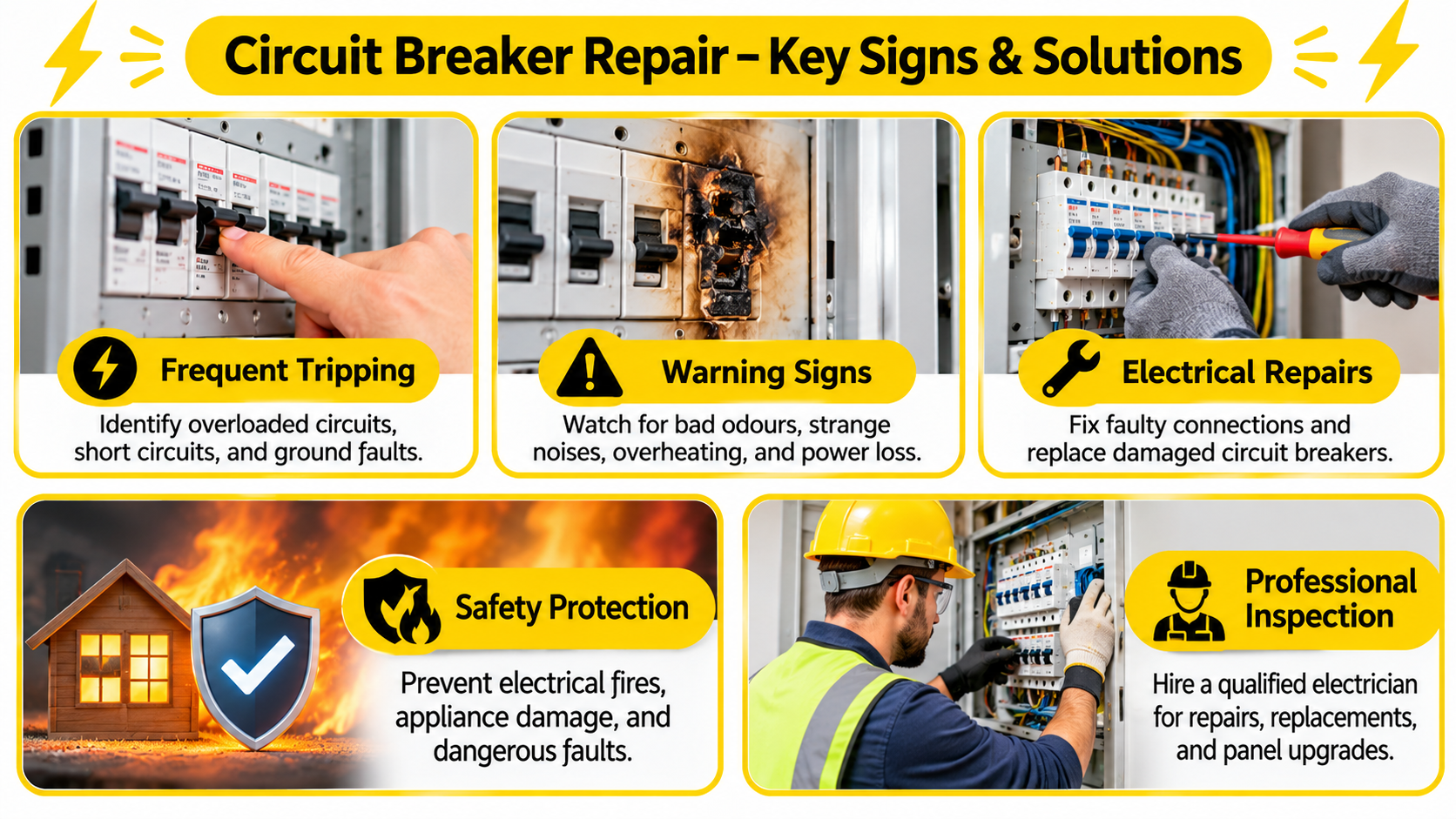 Getting circuit breakers fixed helps to pinpoint the problem, get stable power back in your home, and reduce any electrical safety risks.
Things to consider:
There are several reasons why a circuit breaker may cause problems in your home, including overloaded circuits, short circuits, ground faults, damaged wiring, or faulty breakers. Electrical breaker repair may be needed to fix these issues and restore proper operation. However, if the breaker is damaged or the electrical panel is outdated, replacement may be necessary. Always hire a qualified electrician for electrical panel repairs and replacements.
What Is Circuit Breaker Repair and Why Is It Important?
Circuit breaker issues need fixing to keep your electrical system working properly. Your electrician may fix the connections or replace the faulty circuit breaker. In some cases, a full upgrade may be required.
The circuit breaker will cut off power within the system if too much current is flowing or there is an electrical fault. This protects the wiring and equipment and reduces the risk of fire.
Failure to fix issues with circuit breakers can cause regular power cuts, overheating, appliance damage, and dangerous electrical situations. Identifying problems with your circuit breakers at an early stage is therefore very important to keep your electrics safe.
What Are the Common Signs That Your Circuit Breaker Needs Repair?
If a circuit breaker is faulty within your property, there may be some symptoms to look out for so that you can get the issue checked out early.
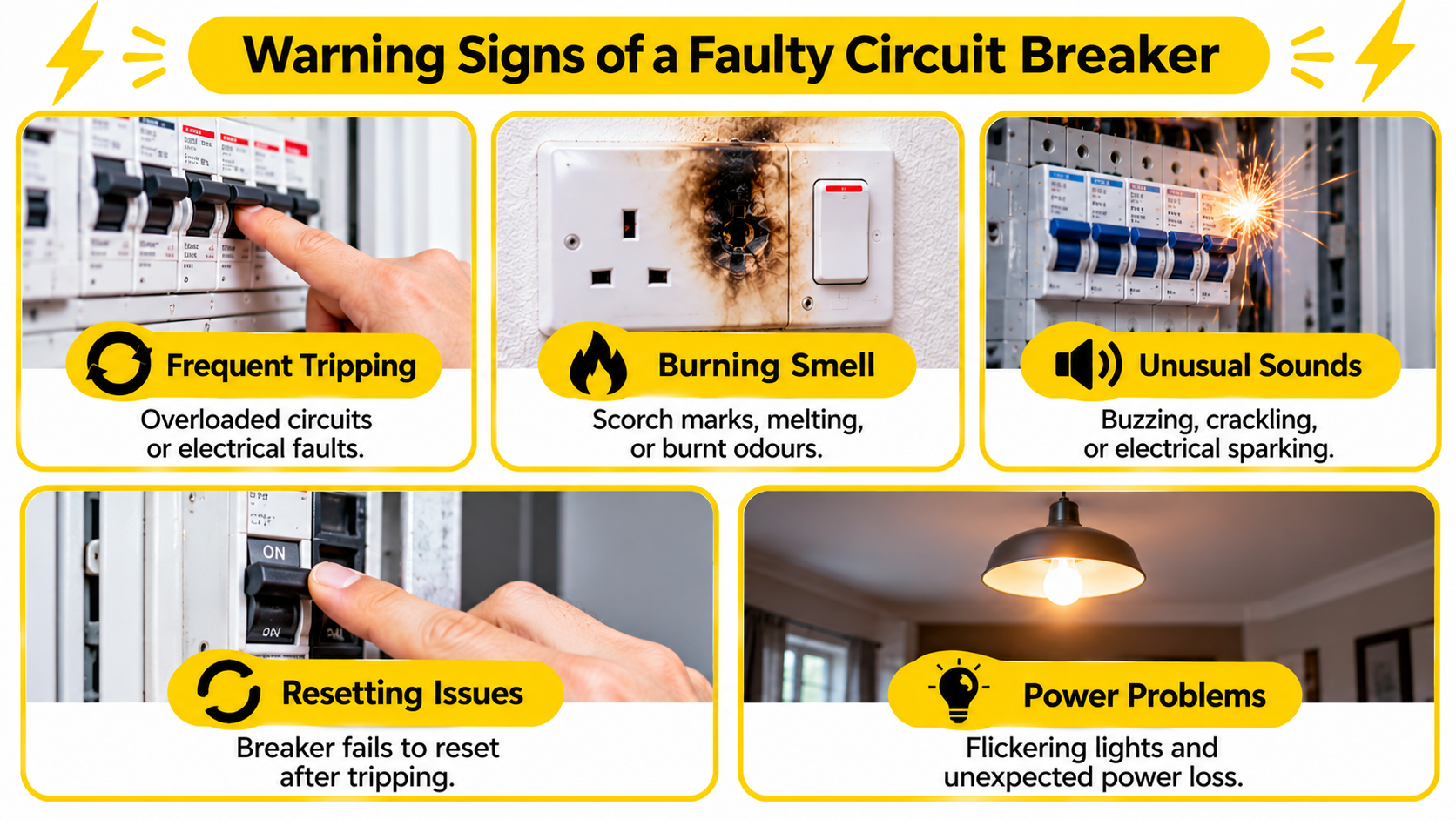 1. Frequent Circuit Breaker Tripping
If a circuit breaker continues to trip, it could be due to overloading, short-circuiting, earthing issues, or a faulty circuit breaker.
Overloading can occur when using high-power devices in conjunction, such as an air conditioner, microwave, and other similarly powerful devices.
2. Burning Smell or Scorch Marks
There may be a burnt smell, dark marks, or melting around the consumer unit. This indicates serious problems. Contact a qualified electrician immediately.
If it is safe to do so, turn off the electricity supplied by this circuit. Don’t touch any damaged parts or attempt any repairs.
3. Buzzing or Crackling Sounds
Buzzing, sparking, and crackling should not occur within a working circuit breaker. If it does, it indicates that there is a problem such as loose connections, arcing, or internal damage.
Call an electrician to tighten connections.
4. Breaker Will Not Reset
If resetting a tripped breaker is unsuccessful once appliances have been switched off, there might be a fault in the circuit, short circuit, earthing fault, or faulty breaker.
Forcing the switch to the ON position multiple times will not fix the issue.
5. Flickering Lights or Unexpected Power Loss
Lights flickering, loss of power from circuits, or interruptions could be an issue with your breakers. However, it can also be caused by loose wiring, faulty fittings, and issues with the electricity supply.
By having an electrician check the circuit, they can determine what is causing the problem.
What Causes Common Circuit Breaker Problems?
Understanding the causes of circuit breaker issues makes it easier to identify the appropriate repair solution.
 Overloaded Circuits
Too many appliances are being used on the circuit, causing it to overheat. The circuit will trip.
If a circuit only occasionally overloads, removing some appliances may help. However, repeated overloads may require breaker box repair, a separate circuit, or an assessment of your home’s electrical capacity.
Short Circuits
A short circuit occurs in an electrical circuit if a conductor touches another conductor by mistake. This is often due to damaged wiring.
This may result in circuits tripping, sparking, and heating up. The problem with the wiring system must be diagnosed and fixed by an electrician.
Ground Faults
These occur due to current leakage to earth. It can be caused by faulty insulation, damp conditions, and faulty electrical equipment.
Installation of GFCI(Ground Fault Circuit Interrupter) protection will help to reduce electric shocks in these situations.
Faulty or Worn-Out Breakers
Breakers can degrade over time. This could mean that they cause unintended tripping, and/or cannot be reset, or are no longer reliable.
To fix this issue, you may need to replace your faulty breaker with a suitable replacement.
How to Repair a Circuit Breaker: What Should Homeowners Do?
To repair an issue with your circuit breaker, you will need to know what the problem is.
Although homeowners can perform some basic checks, repeated breaker trips or issues inside the electrical panel, including the need to upgrade a breaker box, should be inspected and handled by a qualified electrician.
- Find out what is not working. Are lights, sockets or appliances not operating?
- Switch off and unplug any appliances on the faulty circuit (if it is safe to do so).
- Look out for anything unusual. If you can see anything unusual, including smelly, discoloured, smoking, or damaged components, DO NOT touch the panel.
- If there appears to be no damage, heat, or strange noises, try resetting it. Follow the guidance given by the manufacturer. Fully switch the breaker to OFF and then switch it back to ON.
- If the fuse continues to trip, will not reset, or if there are any warning signs, ensure that nothing is used on this circuit and get a qualified electrician to check it.
Do not take the cover off or attempt to change the breakers, as components in the electrical panel could be live, even if the main fuse has been switched off.
Circuit Breaker Repair vs. Replacement: Which Is Better?
Depending on the state of your breaker, wiring, and electrical panels, you may not need to replace the breaker.
| Situation | Recommended solution |
| Occasional overload | Reduce electrical load |
| Loose or damaged wiring | Professional wiring repair |
| Faulty breaker | Replace the affected breaker |
| Repeated unexplained tripping | Professional electrical diagnosis |
| Corrosion or significant panel damage | Panel inspection and possible replacement |
| Insufficient electrical capacity | Consider a panel upgrade |
When Should You Replace a Circuit Breaker?
A faulty circuit breaker may need replacing if it is damaged, does not reset, is too hot, or is not working properly.
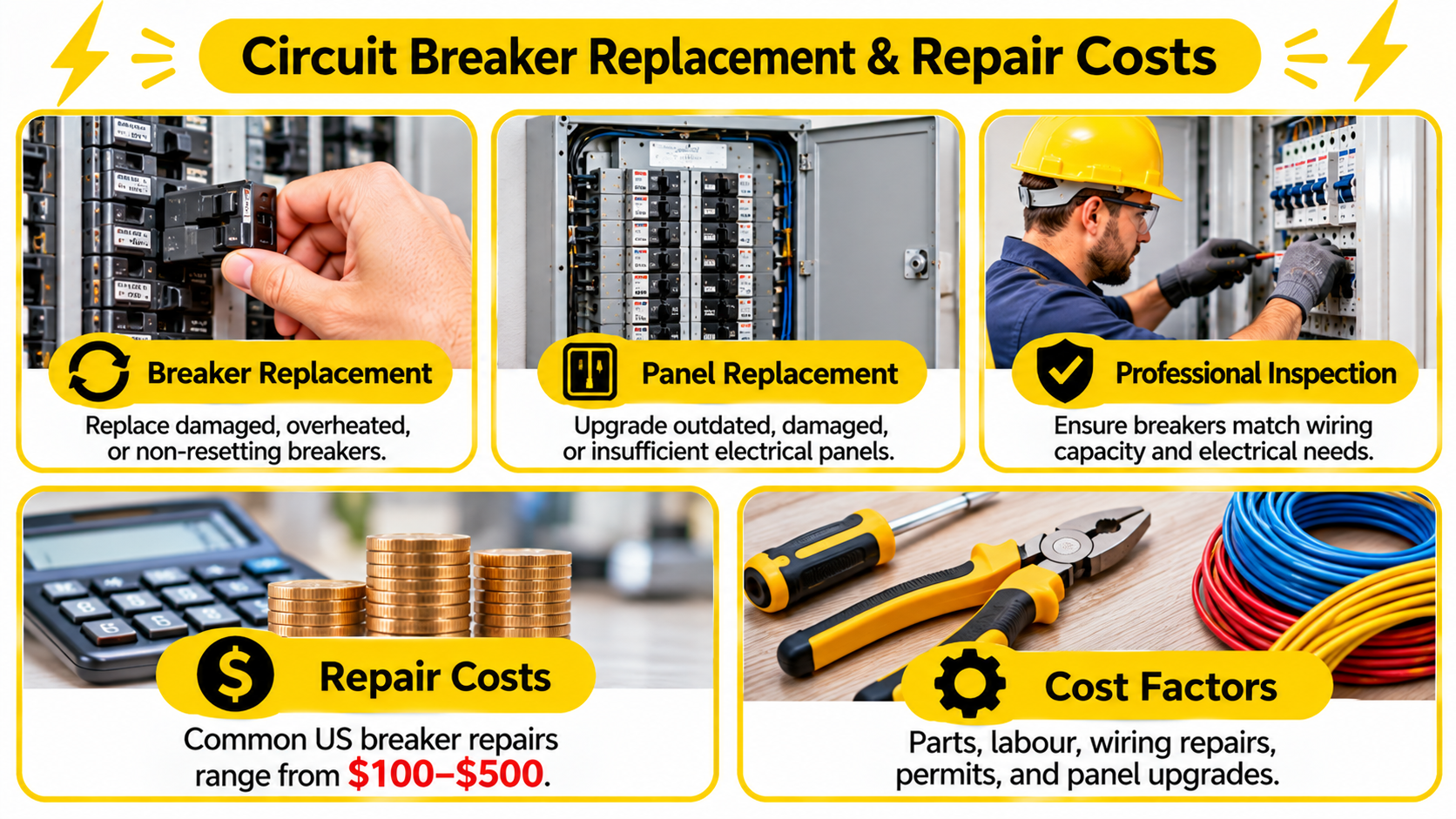 An electrician will fit a suitable replacement circuit breaker. If you install a high-rated circuit breaker without checking if the wiring can deal with with it, this could put your house at risk of fire.
When Is Circuit Breaker Panel Replacement Necessary?
If the electrical panel is in very poor condition, damaged, outdated, or cannot accommodate your electrical needs, it may make sense to change the electrical panel entirely.
If you are making major changes to your home or adding high-demand electrical appliances, replacing your breaker panel may be necessary. An electrician should inspect your existing setup to determine whether a panel replacement or upgrade is needed.
How Much Does Circuit Breaker Repair Cost in the US?
The price of repairing or replacing a circuit breaker will depend on a number of factors.
The potential costs are:
- Cost of replacing a circuit breaker
- Cost to repair electrical wiring
- Cost to repair electrical panel box (Further electrical work may be required depending on the scale of the issue.)
- Cost to replace circuit breaker panel – this is generally more expensive than other costs as equipment will need to be purchased and installed. Additional electrical wiring or upgrades may be required.
In the US, the cost to replace a breaker and complete panel repairs can range from $100 to $500 for common repairs. A complete electrical panel replacement can cost significantly more. These are general estimates, not fixed prices.
Ask for a breakdown of costs including parts, labour, any necessary permits, and any extra electrical improvements.
How Can You Prevent Future Circuit Breaker Issues?
Ensure electrical safety to prevent any unnecessary issues with your breakers.
- High-power devices should be spread evenly throughout correct circuits.
- Damaged cables, sockets, or plugs should be replaced.
- Ensure you have safe access to the panel.
- Frequent switching off of circuit breakers should not be normal.
- Consider having a check done on your electrics if you have done large-scale improvement works, or have bought an older property or added substantial new electrical demand.
- AFCI(Arc-Fault Circuit Interrupter) and GFCI(Ground Fault Circuit Interrupter) protection devices should be tested according to the manufacturer’s instructions.
Electrical checks should be carried out in older properties, or if you have undertaken a major renovation, or added large appliances. (Electrical Safety Foundation International)
How Can Professional Electrical Services Help?
Professional electrical services can help you find the cause of this issue.
Electricians will investigate your electrical panel and perform tests on the affected circuits to locate any damaged parts. They can then recommend the correct solutions to fix or replace these parts.
Electrical Panel Inspection
Check for faulty circuit breakers, overheating, and wiring issues. Check if there are capacity issues.
Breaker and Wiring Replacement
If there are faulty circuit breakers or connections, electricians can repair the faulty components or replace the breaker switch with a suitable one.
Electrical Panel Upgrades
Increasing electrical capacity within an electrical panel is often required. Before upgrading, it is important that your electrician determines how much electricity is required in your home.
Why Choose ProHandymanNow for Electrical Assistance?
Electrical issues should be treated carefully. If there are any issues with your circuit breakers, it may be an indication of something more serious. ProHandymanNow is here to help you understand what work is required in your home and how best to solve it.
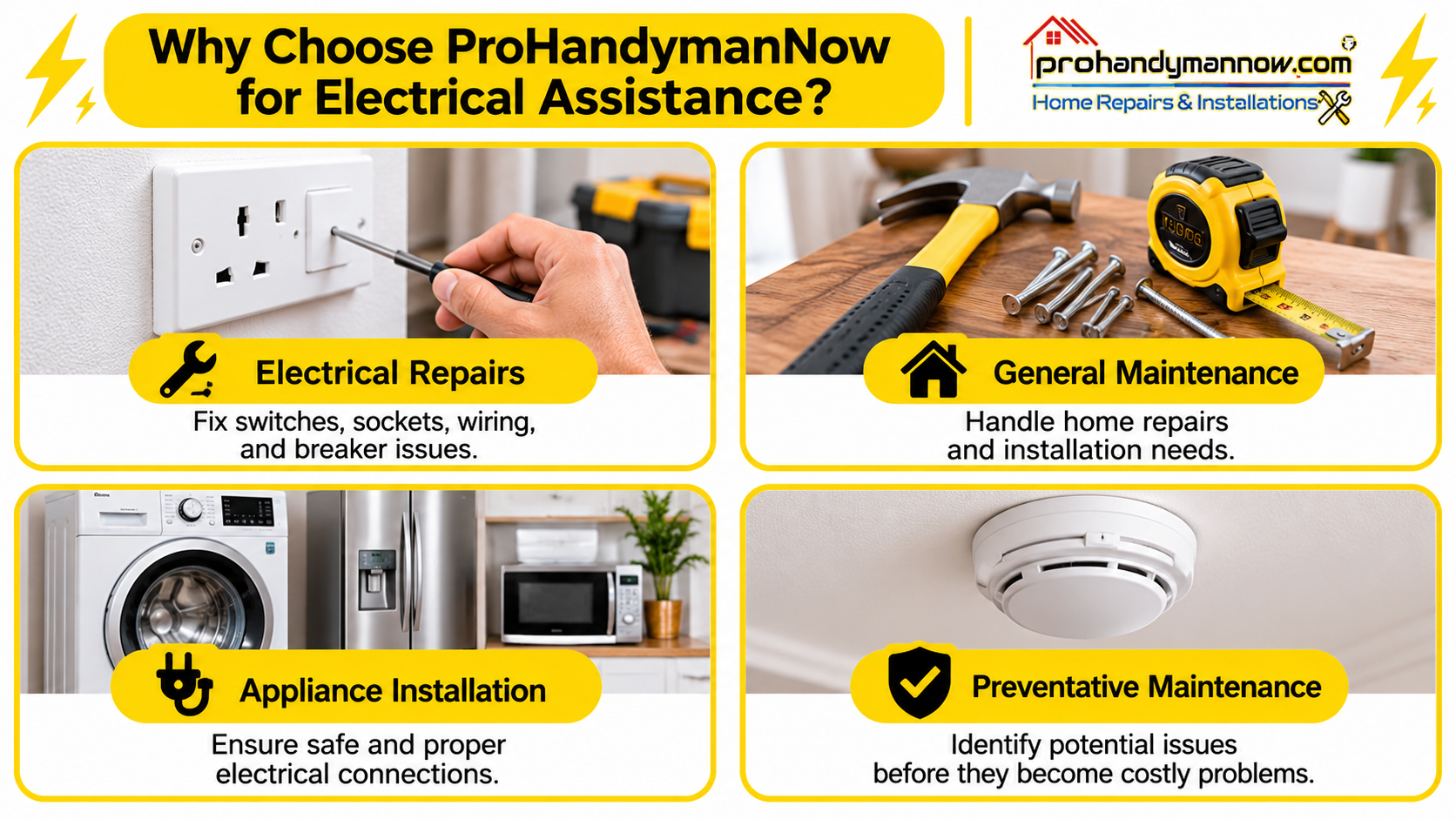 To fix circuit breaker issues, inspect or replace electrical panels ensure that you find the correct professional.
Support for Different Home Maintenance Needs
We can complete a range of maintenance tasks within your property, including:
- Electrical Repairs: To fix switches, sockets, wiring issues, and other electrical issues.
- General Repairs: For general maintenance and installation within your home.
- Fixtures/Appliance Installation: To improve in the correct way by providing the correct connections.
- Preventative maintenance: Spotting any potential issues before more expensive or disruptive issues occur.
Visit our About Us page to learn more about the services we offer and how we help homeowners with their repair and maintenance needs.
Conclusion
If you’re experiencing regular trips, strange smells, noises, or power cuts with your circuit breakers, it is very important to get them checked out. Getting the fault sorted early can help avoid any electrical damage and ensure safety in your property. If you require replacement of circuit breakers, repairs to wiring, or an entire upgrade of your electrical panel, ensure that you have a qualified electrician carry out this work.
For professional help with circuit breaker repair, electrical panel replacement, or other home electrical issues, Contact Us today.
FAQs
1. Why does my circuit breaker keep tripping?
Circuit breakers can stop working correctly due to overloading, short circuits, earth faults, damaged wiring, or a faulty circuit breaker. An electrician can find out why and provide the right repair.
2. Can I replace a circuit breaker myself?
As replacing a circuit breaker within an electrical panel can involve working on live parts, it is safest to have a qualified electrician do this, as well as any internal repairs within the panel.
3. When should I replace my electrical panel?
Replace your electrical panel if it has major damage, rust, outdated components, or insufficient capacity. An electrician can determine whether repair or complete replacement is needed.
continue reading
Related Posts

Summary: This blog will cover some essential electrical maintenance tips
-
Summary: Learn about range hood types, range hood installation, costs,
-
Summary: Office cabinets provide useful storage for documents, supplies, and