Summary: This blog will cover some essential electrical maintenance tips that can be carried out by homeowners to ensure your electrical systems are safe and efficient. You will learn how to check your sockets, switches, cables, and consumer units, understand how to look for early warnings, how to avoid common issues, and know when to contact a competent electrician.
A Complete Guide to Electrical Maintenance: Tips for Safety and Efficiency
Your home’s electrical system provides power to many of your household essentials, including lighting, electrical appliances, and heating and cooling equipment. However, issues such as damaged wiring, overloaded sockets, and poor maintenance can result in safety risks and lack of efficiency.
 Routine electrical maintenance can help spot any minor issues that may exist. This will keep the components of your electrics in great condition, reduce any unplanned disturbances, and help keep your home safe.
Throughout this guide, we will cover what electrical maintenance is, what should be regularly maintained, how to spot warning signs, and when to contact a qualified electrician.
What Is Electrical Maintenance?
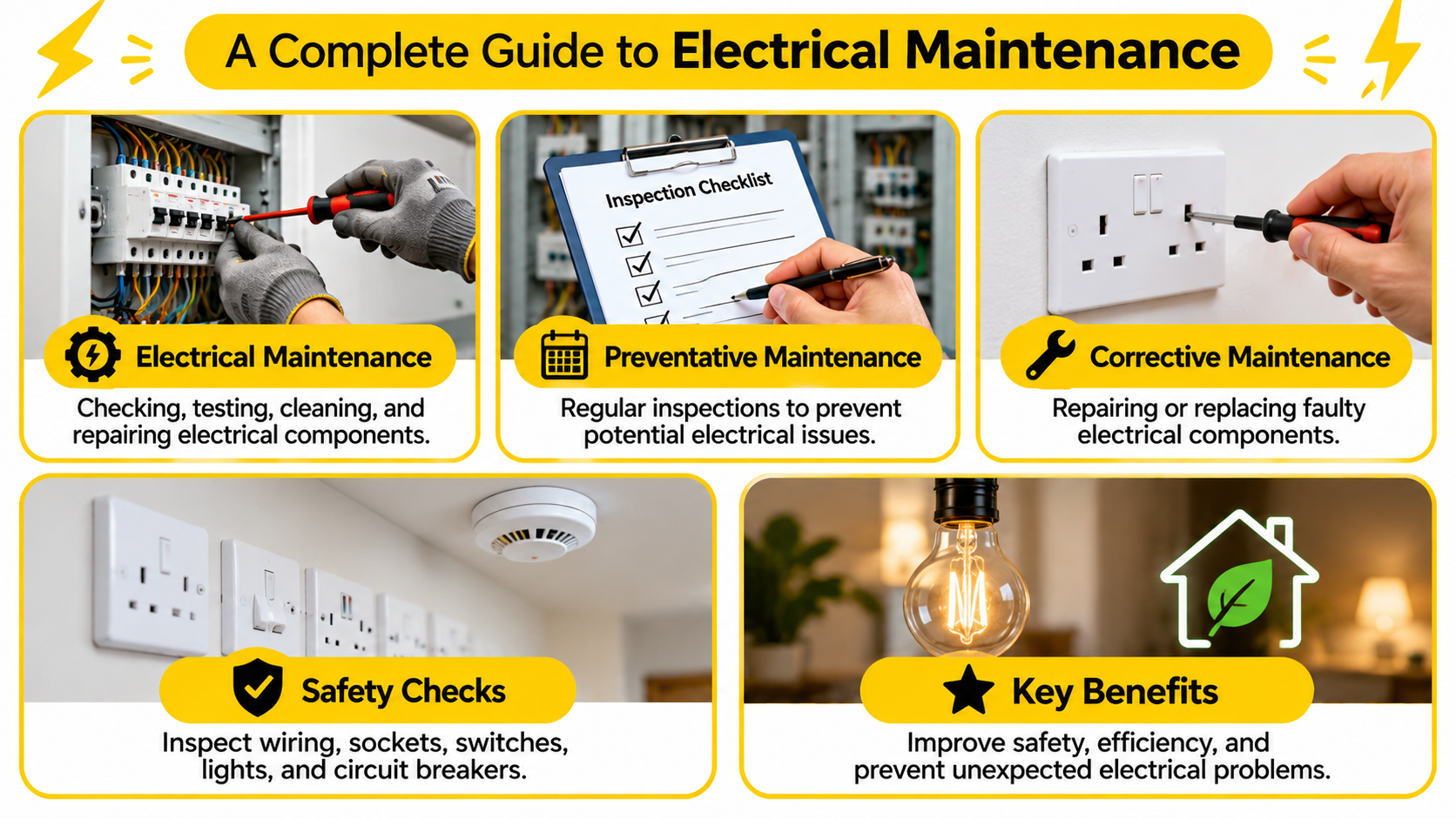
Electrical maintenance involves checking, testing, cleaning, and repairing your electrical components so that they work safely and efficiently.
This includes checking for damaged electrical wiring, sockets, switches, lights, circuit breakers, and panels. Repairs can also include replacing faulty components, upgrading old components, and checking safety components depending on the state of the property.
There are two main types of electrical maintenance:
- Preventative electrical maintenance: A regular inspection and service of electrical equipment to prevent potential issues with the equipment.
- Corrective Maintenance: A repair or replacement of a faulty or malfunctioning electrical component.
Both approaches help maintain a reliable electrical system and reduce the risk of unexpected problems.
Why Is Regular Electrical Maintenance Important?
Keeping on top of your electrical maintenance will help you to keep your home safe, make sure it is working properly and reduce the risk of costly repairs. Electrical systems will deteriorate over time, especially if there are several appliances running for long periods.
Here are some key reasons why you should keep your electrical system in good condition.
1. Improves Home Safety
Faulty wiring, loose connections, and overloaded circuits can cause electrical shocks and fires. Regular checks will help you find these problems.
2. Prevents Unexpected Electrical Problems
A fault in your outlet or wiring may not cause an immediate problem, but ignoring the warning signs can lead to unexpected power cuts or equipment breakdowns. Preventive electrical maintenance helps identify these issues early and reduces the risk of such electrical problems.
3. Supports Electrical Efficiency
Loose fittings, broken parts, and old installations can affect your electrical appliances. Keeping them in good condition will keep your system working properly.
4. Extends Equipment Lifespan
Electrical panels, switches, and sockets can become weaker over time. Carrying out regular maintenance and replacement will reduce unnecessary stress on your system.
Which Electrical Components Need Regular Maintenance?
Several areas of your home involve electricity, so it’s a good idea to keep an eye on what you can see in your home.
 1. Electrical Wiring
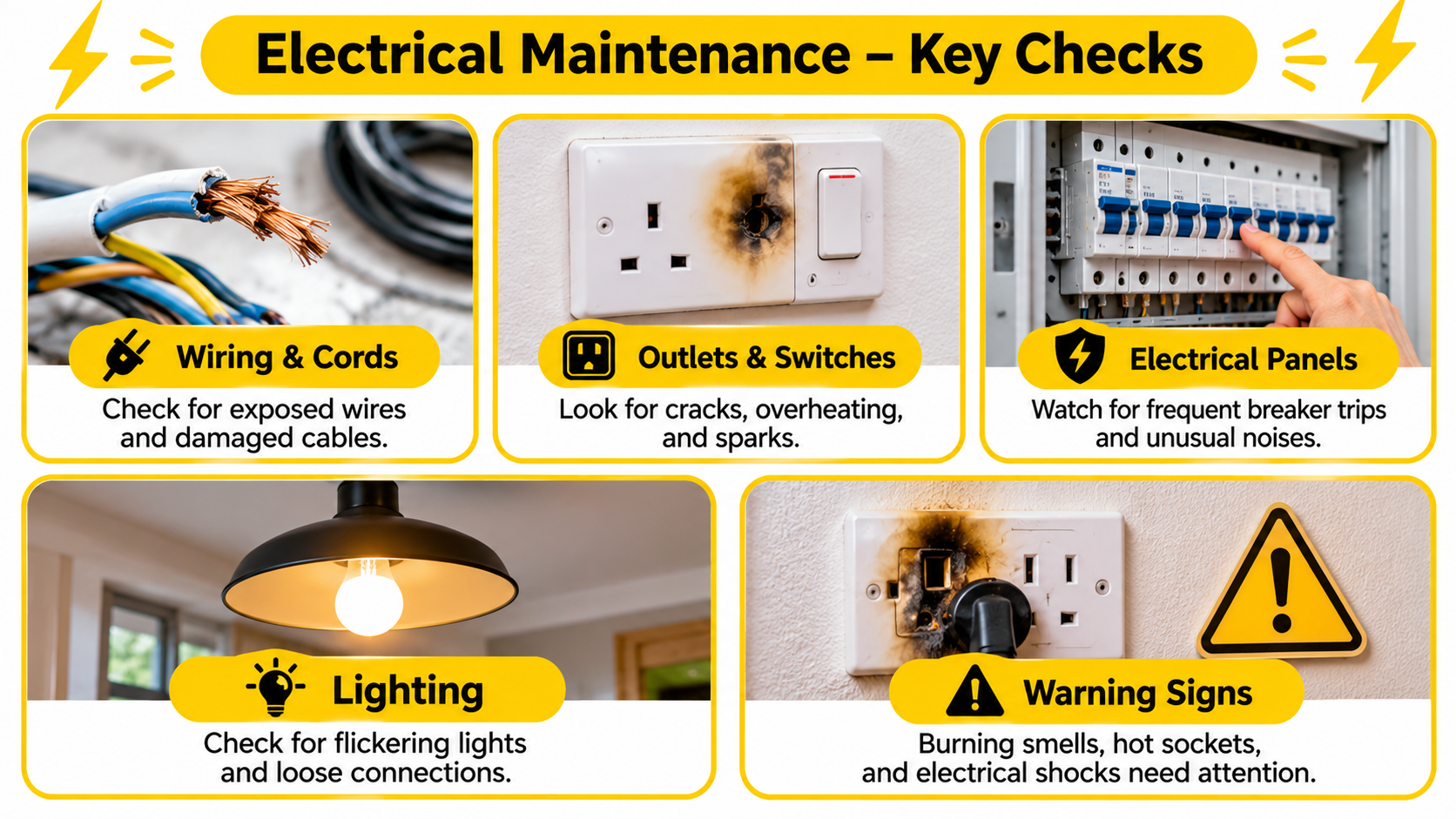
Look at any visible cables and check for any cracks in the insulation or split cables. If there is damage, it can be dangerous and cause shocks and fires.
Never attempt to repair exposed or damaged electrical wires yourself. Contact a qualified electrician to inspect and repair them.
2. Electrical Outlets and Switches
Look for any cracks, discolouration, loose connections, or excessive heat. Listen out for any buzzing, sizzling, or crackling noises.
If you notice sparking, overheating, or burning smells coming from your outlets, stop using them and arrange electrical inspections by a qualified professional.
3. Circuit Breakers and Electrical Panels
Your electrical panel distributes power around your home. Circuit breakers help to protect each circuit.
Ensure that it is easily accessible and the circuits are labelled clearly. If the breakers are tripping regularly, there is a burning smell, buzzing, or visible damage, you should contact an electrician.
4. Lighting Fixtures and Electrical Cords
Look for any flickering lights, loose connections, or damaged wiring. Check that appliance leads are not cut, torn, bare, or have any damaged plugs.
Use the correct bulbs that match the recommended wattage of the light fitting and replace any damaged cables.
What Are the Common Signs of Electrical Problems?
Electrical problems sometimes display symptoms that can be spotted early on. Identifying any changes can allow you to organise a repair and prevent further issues.
Look out for these common symptoms:
- Circuit breakers frequently tripping.
- Lights flickering or dimming.
- Smells of burning / rubbery odours. This could be a sign that there is too much heat coming from the outlet/switch/appliance.
- Overheating sockets. If you see any heat marks or dark spots, this may mean there are issues with the wiring.
- Loud buzzing or crackling noises coming from your sockets/switches/electrical panels. This needs to be dealt with by a professional.
- Sparking or slight shocks. These can be a sign of dangerous electrical issues.
If you notice any of these signs in your electrical system, stop using the affected outlet or equipment. If you see smoke, flames, or immediate electrical hazards, keep your distance and call emergency services. Otherwise, arrange an inspection with a qualified electrician.
How Often Should You Perform Electrical Maintenance?
Electrical maintenance will depend on how old your home is, how much electricity you use, and the state of your electrics. However, doing basic visual inspections and regularly maintaining them will help you know when something may be wrong.
A good maintenance routine would include.
| Frequency | Maintenance Task |
| Monthly | Test GFCI and AFCI devices according to manufacturer instructions |
| Regularly | Check visible outlets, switches, plugs, and electrical cords |
| When problems appear | Arrange an inspection for flickering lights, unusual sounds, or repeated breaker trips |
| After renovations | Have new electrical installations and affected circuits checked |
| When buying an older home | Arrange a professional electrical inspection |
Monthly testing of GFCI and AFCI devices is recommended by the Electrical Safety Foundation International. Older homes, large remodels, and new appliance installations are other good reasons to have a professional electrical inspection.
What Are Some Essential Electrical Safety Tips?
Some basic safety rules should be followed to help prevent shocks, overheating, and electrical fires.
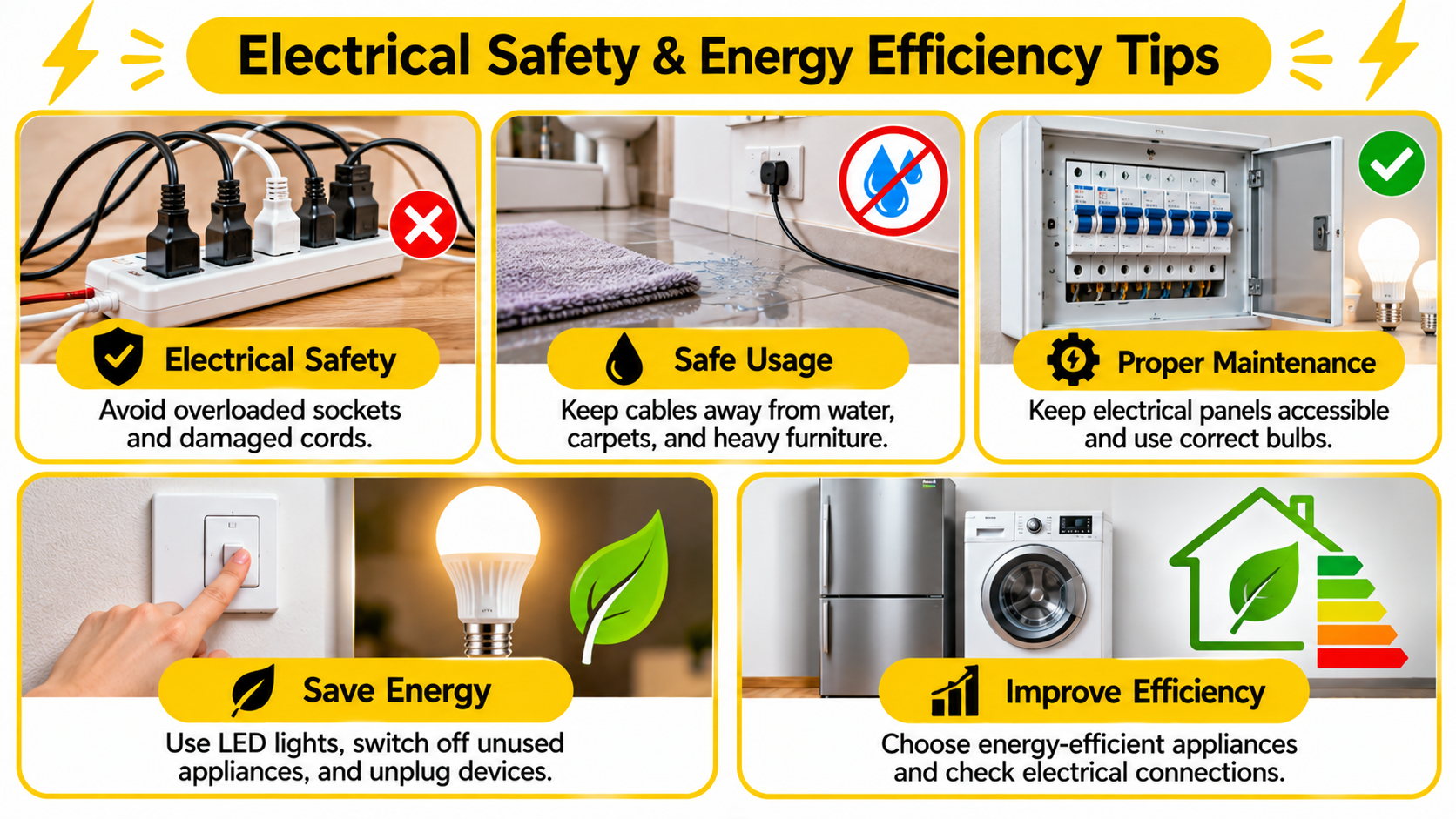 Consider these precautions:
- Avoid overloading outlets: Do not connect too many high-power appliances to one outlet or power strip.
- Replace damaged cords: Never use electrical cords with exposed wires, cracks, or damaged plugs.
- Use extension cords temporarily: They should not replace properly installed outlets.
- Keep electrical equipment away from water: Use suitable GFCI protection in areas where water and electricity may come into contact.
- Keep electrical panels accessible: Avoid placing furniture or storage items in front of the panel.
- Use the correct light bulbs: Follow the recommended wattage for each lighting fixture.
- Install working smoke alarms: Test them regularly and follow the manufacturer’s replacement guidance.
Avoid placing these cables beneath carpets, through doorways, or heavy furniture, which can cause damage to the protective covering and make them more dangerous.
How Can You Improve Electrical Efficiency at Home?
Electrical efficiency is using electricity effectively and efficiently. Not all costs associated with energy can be reduced by maintenance, but having efficient equipment can help increase performance.
Here are some practical ways to improve electrical efficiency:
- Use LED Lighting: Replace old light bulbs that are suitable with LED bulbs.
- Switch off Lights: Turn off any lighting or equipment you’re not using.
- Tighten Connections: Have any loose or damaged connections looked at by a professional.
- Energy-efficient appliances: When replacing old appliances in the home, take into consideration how energy efficient they are.
- Unplug Devices: Unplug suitable devices when not in use.
- Check electrical capacity: If you’re planning on adding large appliances or extra circuits, have an electrician check your electrical capacity.
If your lights are regularly flickering or tripping circuit breakers occur when multiple items are used at once, a qualified electrician can advise you if there is an issue with the circuit or electrical system.
When Should You Hire a Professional Electrician?
Basic property maintenance will be visual; however, electrical installations will often require professional knowledge and tools.
Contact a qualified electrician when you experience:
- Frequent tripping of a circuit breaker
- Damage or exposed wiring
- Unusual burning smell or heat from electrical components
- Sparks coming from the outlets and switches.
- Electric shocks or tingling.
- Faulty electrical panels and breakers.
- Issues when fitting large electrical appliances.
A professional can help you by visually checking the electrical installation to find the cause of the issue and recommend appropriate electrical repairs.
DIY Maintenance vs. Professional Electrical Services
| DIY Maintenance | Professional Maintenance |
| Checking visible cords for damage | Inspecting internal wiring |
| Looking for outlet discoloration | Testing electrical connections |
| Keeping the panel area clear | Inspecting electrical panels |
| Checking for unusual sounds or smells | Diagnosing circuit faults |
| Testing safety devices as instructed | Repairing or replacing faulty electrical components |
Do not open electrical panels, touch any exposed wires, or work on live circuits. Work on electrical circuits should only be done by appropriately qualified personnel following relevant codes and local requirements.
How Does Electrical Installation Maintenance Help Older Homes?
Older properties can have outdated electrical systems. Adding more appliances such as computers, air conditioning, kitchen appliances, plus many more can cause extra strain on your existing circuits.
Electrical installation maintenance can help to determine if your current electrical systems are still appropriate for your household’s requirements.
During a professional inspection, an electrician may check:
- The condition and age of existing wiring.
- The capacity and condition of the electrical panel.
- Grounding and electrical protection devices.
- Outdated outlets, switches, and connections.
- Whether additional circuits are needed for new appliances.
If you’ve bought an older property, or have carried out renovations or bought new large appliances, it may be a good idea to get an electrical inspection to check for any outdated parts that may need upgrading.
ProHandymanNow: Home Maintenance and Electrical Solutions
Ensuring that the electrical parts in your home are in good working order is an important factor when keeping your home safe and functional. In addition to checking the electrical parts in your home, other areas also need regular maintenance.
 ProHandymanNow provides a range of home maintenance and repair services for homeowners and property managers. We provide property maintenance services including checking sockets and switches, fixing faulty wiring, and other general home maintenance tasks.
General Repairs and Property Maintenance
Sometimes electrical work will come hand-in-hand with other home repairs or improvements. If you are doing a renovation, it could be that you need some lighting, appliance fitting, or repairs.
We can also offer you plumbing fittings, carpentry, appliance fitting, and repair services to help your home.
Finding the Right Help for Your Home
It is very important that you have the correct professional to help with your home repairs or maintenance issues. If you have any issues with your electrical wiring, panel, or circuitry, it should always be checked by a properly qualified electrician.
From electrical maintenance and repairs to general home improvement services, explore the available solutions and read about us to learn more about our services
Conclusion
Regular electrical maintenance will ensure that everything in your home, including wiring, sockets, switches, and electrical panels, is kept in great condition. This will help eliminate any potential dangers by spotting any warning signs, preventing overloaded circuits, and getting professionals to come in for regular checkups.
Don’t ignore any strange noises, burning smells, flickering lights, or regularly tripping breakers. Fixing these problems early on can help prevent more serious electrical problems.
Keep your electrical system safe and in good condition with the right maintenance support. Contact us to discuss your electrical maintenance needs.
FAQs
1. How often should electrical maintenance be performed?
Visually inspect your electrical components and perform monthly GFCI and AFCI testing following the manufacturer's guidelines. Schedule regular electrician inspections if you notice any of the below indicators.
2. What are the common signs of electrical problems?
Flickering lights, frequently blowing breakers, hot outlets, burning smells, humming noises, and damaged wiring are common indicators that will require inspection by a qualified electrician.
3. Can homeowners perform electrical maintenance themselves?
Homeowners can perform basic visual checks, inspect cords, and test safety devices according to instructions. However, wiring repairs, panel inspections, and electrical installations should be handled by qualified professionals.
continue reading
Related Posts

Summary: Electrical circuit breaker repair can help avoid any electrical
-
Summary: Learn about range hood types, range hood installation, costs,
-
Summary: Office cabinets provide useful storage for documents, supplies, and