
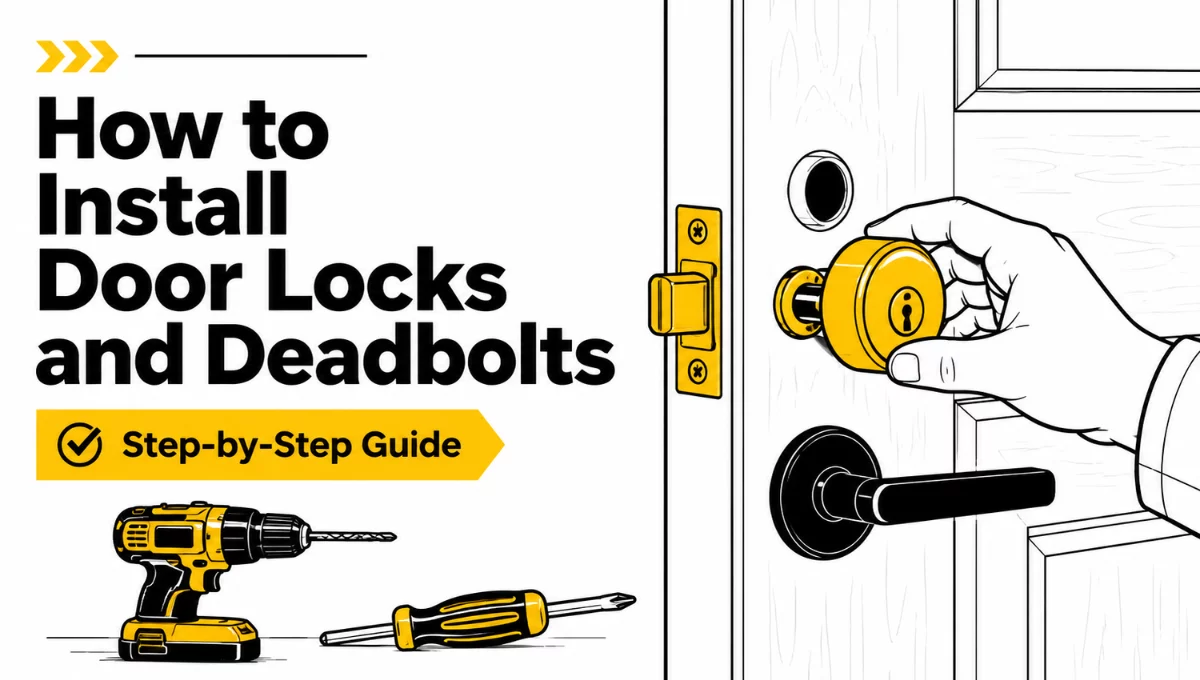
Summary: Installing a door lock or deadbolt is a great way to enhance the security of your home and ensure the proper functioning of your door. This guide provides steps to install or replace door locks, knobs, and deadbolts. It also details the various types of locks, tools needed, crucial measurements, steps to installation, upkeep tips, and signs it is time to call a pro.
How to Install Door Locks and Deadbolts: Complete Homeowner Guide
How to Install a Door Knob with Lock? | Keyless Entry System | Replace Deadbolt Lock
Installing a new door lock or deadbolt is one of the easiest ways to add a layer of security to your home. Whether you are simply swapping out an old locking mechanism, upgrading your hardware to a deadbolt, or installing locks on a brand new door, this is a project you can complete with a few basic tools and some careful planning.
A door lock installation service not only protects the items in your home and your family, but also allows your door to function as intended. Even the best lock can give you a false sense of security if it’s been installed improperly. For a lock to work properly, you need to take an accurate measurement, be sure everything is lined up appropriately, and securely fasten everything into place.
This guide will break the process of installing a door lock and deadbolt down into easy-to-follow steps. This guide will also tell you everything you need to know about the tools, measurements, and the most common mistakes about door lock replacement.
Why Install a New Door Lock or Deadbolt?
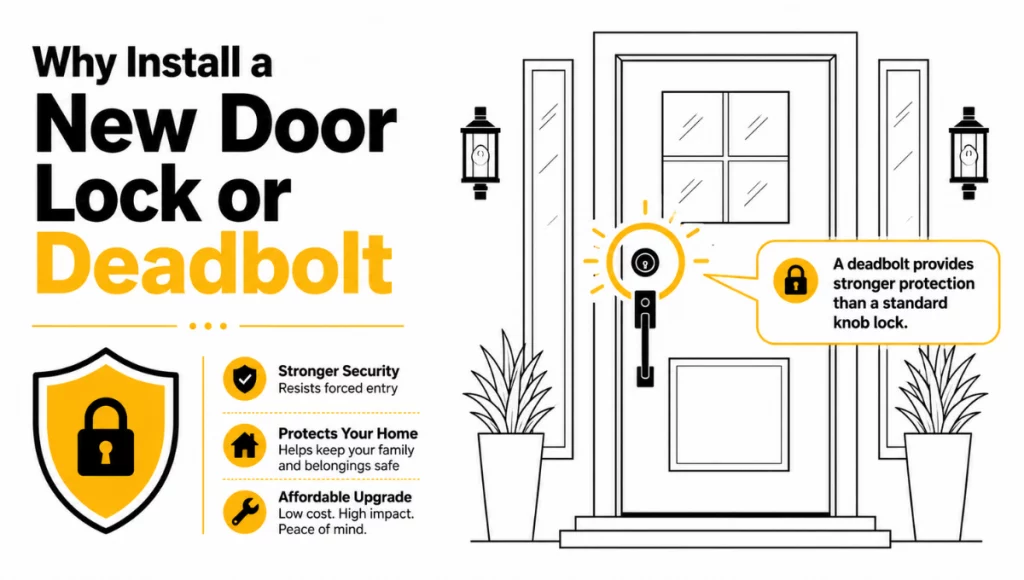
Did You Know?
A deadbolt provides stronger protection than a standard knob lock.
There are many reasons homeowners want to know how to replace a door locks or install new locks. For instance, new locks may be needed after the homeowner moves in, a key is lost, there are concerns about security, or the homeowner moves in and finds it difficult to operate the lock.
A deadbolt installation provides even more security than a standard doorknob or lever lock. Standard door locks have parts that are not solid and do not extend the entire length of the door frame. Because deadbolts are solid and extend further into the door frame, a strong deadbolt will make the door more secure against being broken into. Some other reasons homeowners choose to replace their locks include:
- Replaced hardware that has gotten old or broken
- Security upgrades for the home
- The homeowner moving
- Deciding to go with a smart home design and install smart home locks
- Going with a new set of keys
- Deciding to match the locks to a new set of doors or to new home finishes.
Understanding Different Types of Door Locks
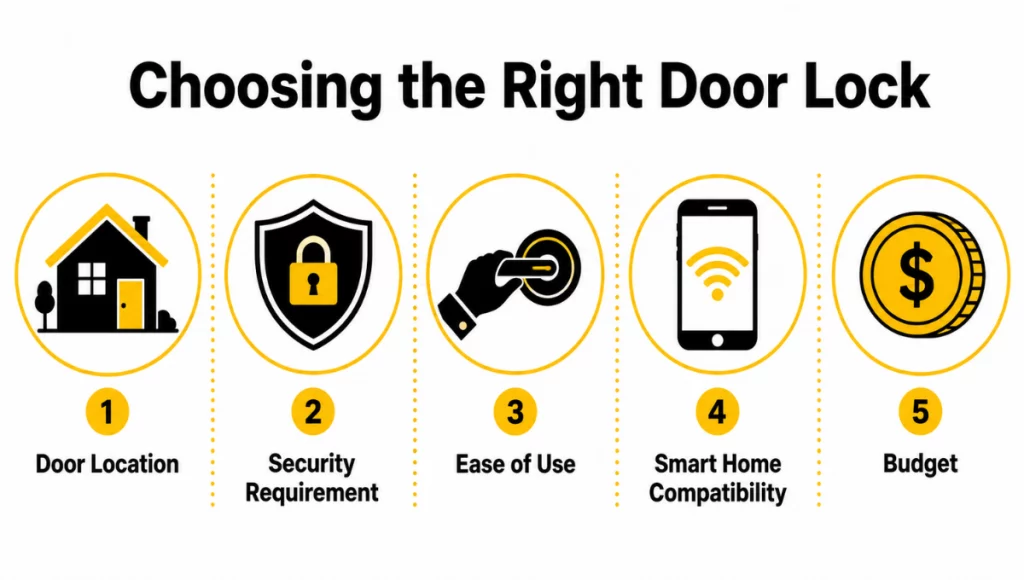
Before starting door lock Installation, selecting the right lock for your door is crucial. Various lock styles offer differing levels of convenience, accessibility, and security.
Knob Locks
Knob locks are a common feature of residential doors. They have a lock built into the knob and are typically engaged from outside with a key and from inside via a turn button.
Convenient as they are, knob locks should not be the sole security lock on an exterior door. They have an even greater tendency to give when subjected to force than a deadbolt would.
Lever Handle Locks
Lever handle locks share similarities with knob locks but utilize a lever instead of a round knob. For children, seniors, and people with limited hand strength, lever handle locks are easier to use.
Lever locks are typically found in offices, commercial buildings, modern residential properties, and homes built to be accessible.
Deadbolt Locks
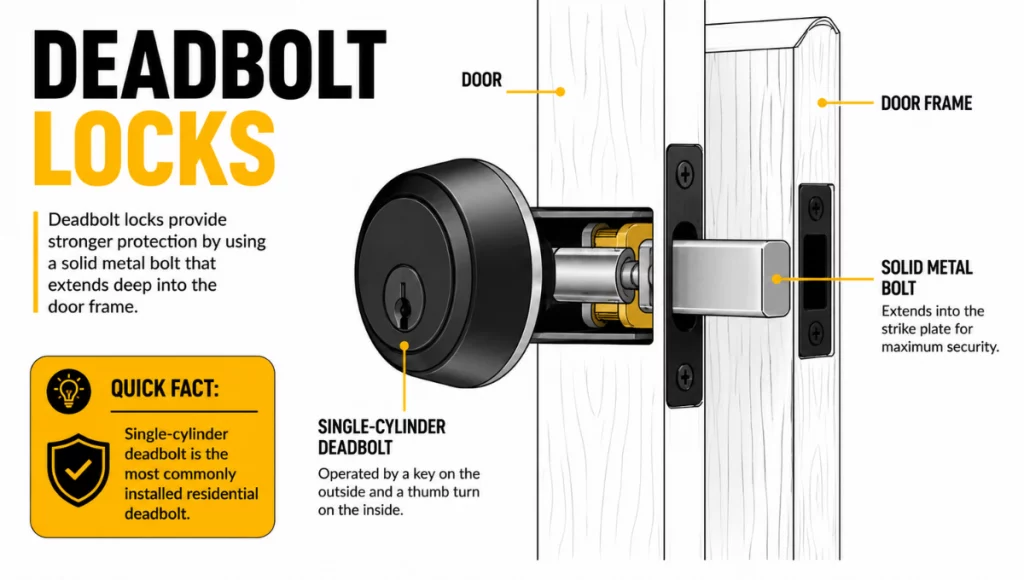
Deadbolts prevent easier forced entry. Unlike a standard lock, a deadbolt has a metal piece that completely comes out and locks into the frame of the door and cannot be pushed back in with a card.
There are a multitude of smart deadbolt installations available, such as single cylinder, double cylinder, electronic, and smart variants. Single cylinder deadbolts are the most frequently used type of deadbolt on exterior doors.
Smart Locks
Smart locks can be controlled via mobile apps, allowing remote locking. They can monitor activities and have added features like keypads, temporary access codes, and fingerprint recognition.
Smart door lock installation can be done where the old deadbolts used to be. However, they need batteries, wireless connections, and apps.
Tools Required for Installation
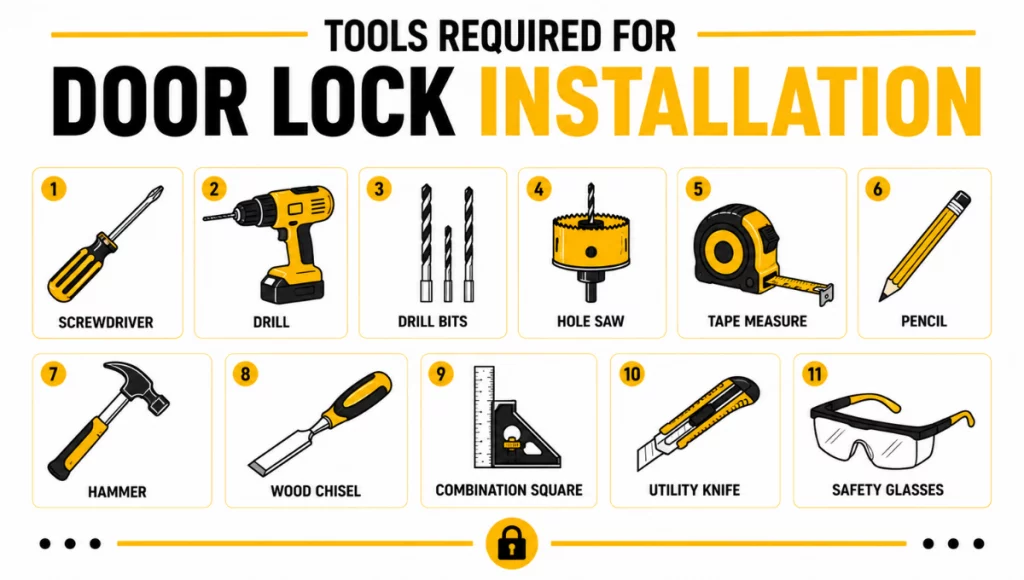
The tools you will need depend on whether you are removing an existing lock vs. drilling and installing door locks for the first time. If there are already holes drilled, you will likely need just a screwdriver to remove the lock. However, you will likely need more tools if you need to drill new holes for a new lock. Here are some door lock installation tools that may come in handy:
- Screwdrivers (Phillips and flathead)
- Drill
- Drill bits
- Hole saw
- Tape measure
- Pencil
- Hammer
- Wood chisel
- Combination square
- Utility knife
- Safety glasses
You should read the instructions that come with the lock for lock installation, because the manufacturer may have a specific way for you to mount the lock, or specific drill bit sizes that you may need.
Important Door Lock Measurements
When selecting a lock, you must understand door lock installation cost and measurement accuracy are also pivotal. Vital measurements include the backset, thickness of the door, and the size of the bore hole.
Measuring the Backset
The backset is the distance from the main lock hole to the edge of the door. The most common backset measurements for residential lock products are 2⅜ inches and 2¾ inches. Modern electronic lock installation often have adjustable latches that correspond to both backset measurements. However, be sure to measure the backset of the door before buying the lock.
Thickness of the Door
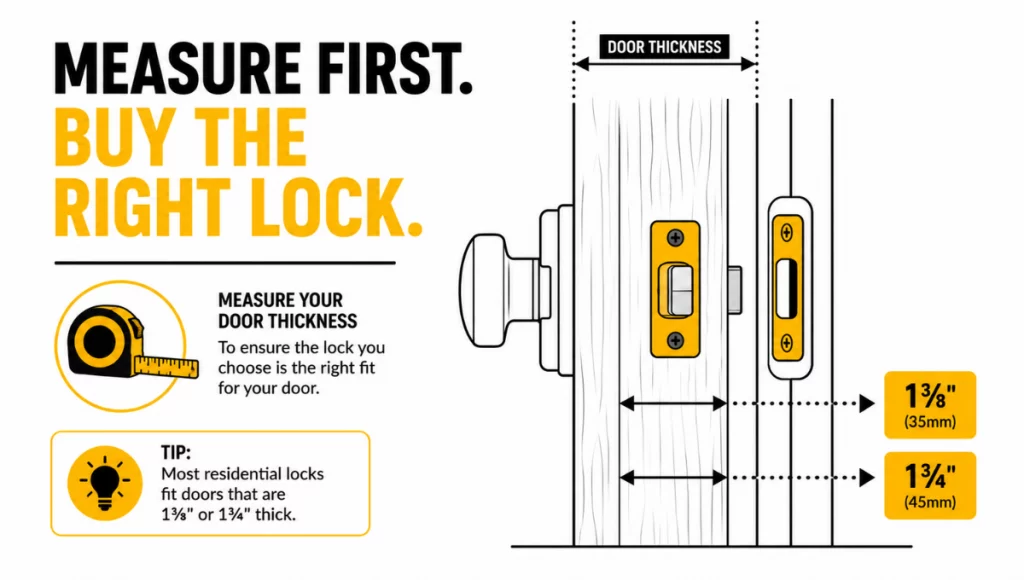
The thickness of most residential doors is either 1⅜ inches or 1¾ inches. Typically, exterior doors are thicker than interior doors. On the packaging of the locks, the compatible door thickness is noted. For doors with a thickness beyond normal, special hardware or an extension kit may be required.
Measuring the Bore Holes
The cross bore, which is normally 2⅛ inches, is the large hole that goes through the face of the door. The smaller hole that goes through the edge of the door is the edge bore, which is most commonly 1 inch.
How to Install a Door Lock and Deadbolt? Step-by-Step Guide
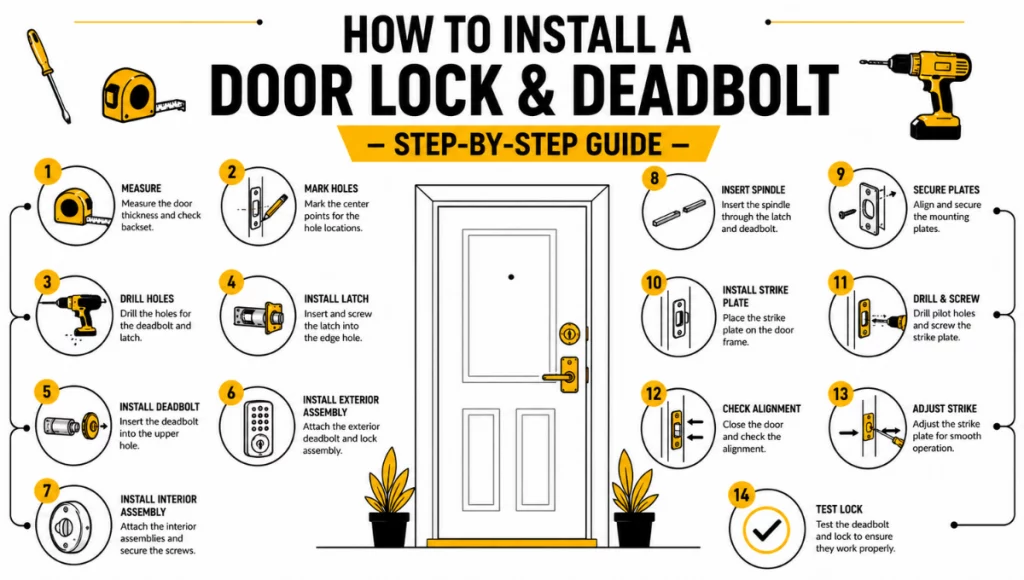
With these straightforward instructions, you’ll be able to use the door lock installer and deadbolt correctly and securely without any problems.
Step 1: Take Out the Existing Lock
To remove the cylinder, open the door and take out the screws on the face of the door. Take out the two halves of the lock, the latch, and the strike plate. Examine the door and the frame for possible damage.
Step 2: Get the Door Ready
To install lock on door, prepare the door by marking the positions for the lock, the latch, and the deadbolt holes, following the manufacturer’s instructions. Take extra care and confirm all measurements.
Step 3: Make the Main Lock Hole
Using the specified hole saw, make the main lock hole from the door side at the midpoint of the hole. Drill the hole from the other side to avoid splintering. Make sure the drill is kept level and wear a drill bit.
Step 4: Create the Edge Bore
Make the edge bore using the specified drill bit. Make sure the edge bore is straight and meets the main bore.
Step 5: Latch
The latch is inserted in the edge bore. It should be flush with the edge of the door.
Step 6: Exterior Lock Assembly
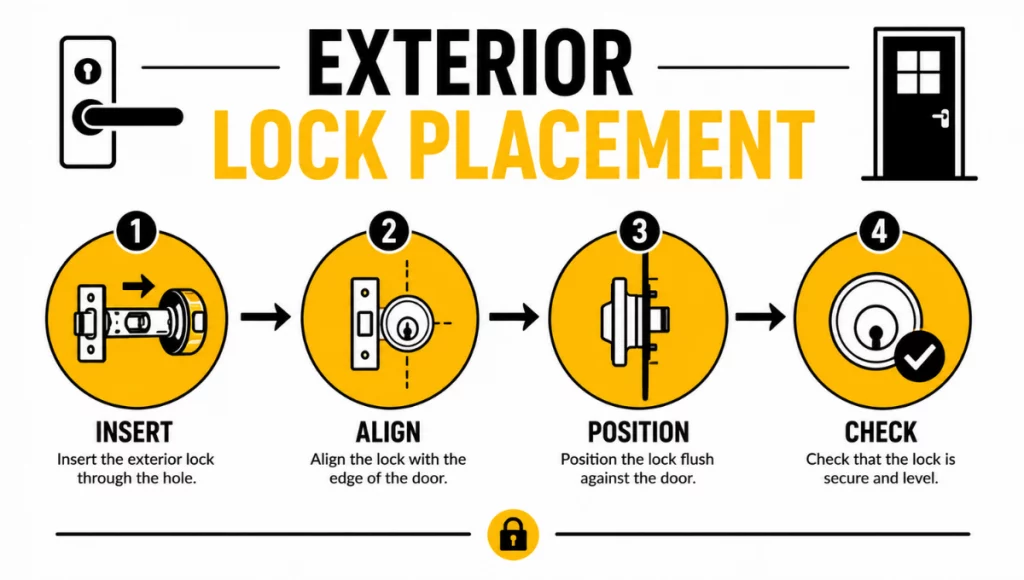
The exterior lock assembly is inserted through the door’s main bore and through the latch; it is fastened flush to the door with the keyhole in the vertical position.
Step 7: Interior Lock Assembly Installation
Make sure the assembly is aligned on the spindle and matched with the mounting holes. Place screws and make sure they’re snug, but don’t overdo it. Before installing the door handle with lock, test the handle and latch.
Step 8: Deadbolt Latch Installation
Place the deadbolt latch in its location, with the UP marking facing upward. If needed, recess the surface, then place screws.
Step 9: Exterior Deadbolt Installation
Pass the exterior cylinder through the deadbolt latch with the keyhole in the upright position. Make sure the cylinder is flush with the surface of the door.
Step 10: Interior Deadbolt Assembly Installation
Place the interior thumb turn and screws. Tighten the screws when the thumb is in the right position. Test the deadbolt for stiffness and adjust it.
Step 11: Strike Plate Position Marking
Close the door and make a mark in the frame where both the latch and deadbolt touch the frame. Lining chalk or lipstick can make mark placements easier.
Step 12: Door Frame Preparation
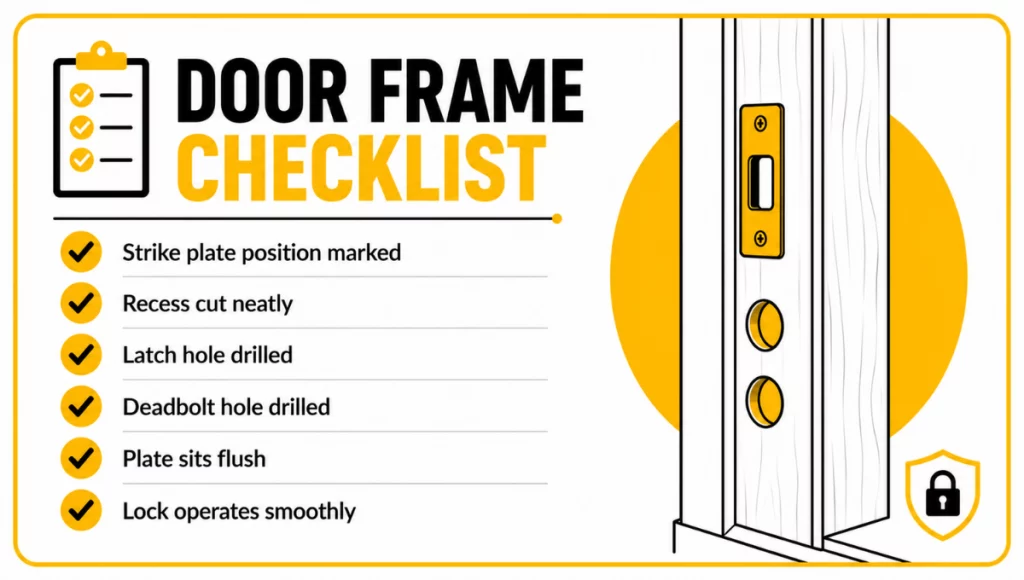
Make a recess for the strike plate, then drill to allow the latch and deadbolt to fully extend.
Step 13: Strike Plates Installation
Secure the latch and deadbolt strike plates. For the latch strike plate on exterior doors, use 3-inch screws to strengthen the door frame.
Step 14: Test Lock & Deadbolt Function
Open and close the door to test the latch. Use the key to test the deadbolt. If they don’t function smoothly, loosen the strike plate to align it and test again.
Door Lock Maintenance Tips
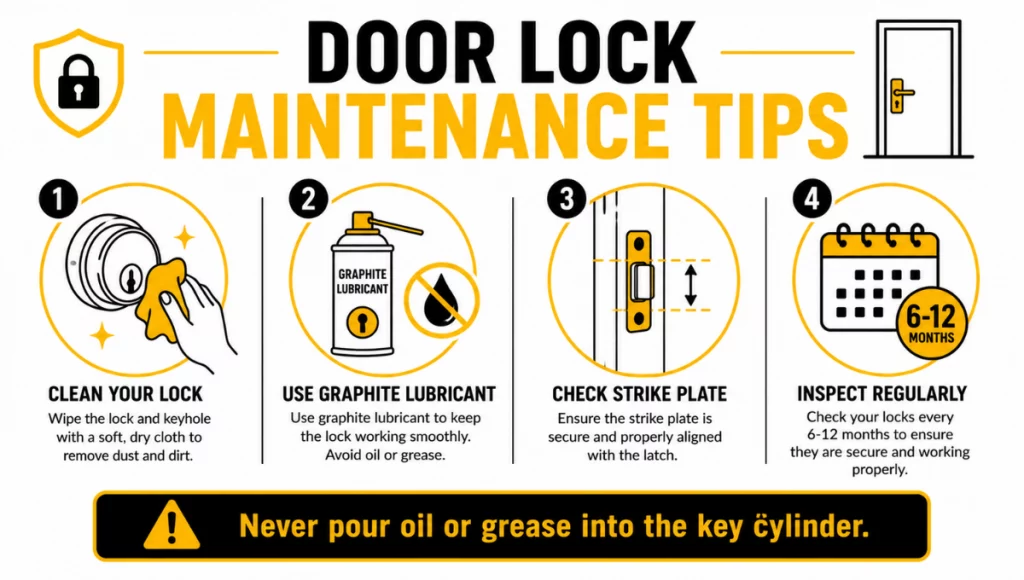
Important: Never pour oil or grease into the key cylinder.
- Routine care of a lock can fend off inconvenient issues and extend lock longevity.
- The condition of a lock should be evaluated every six to twelve months. External lock hardware should be cleaned, and screws should be tightened. The strike plate should be checked for proper alignment.
- Locks should only be lubricated with a dry graphite lubricant or lubricant specifically designed for locks.
- Key cylinders should never be filled with oil or any grease, as these will surely compromise the cleanliness of the cylinder and the lubricant.
- Assuming that a deadbolt is damaged should be a last resort. Door alignment should be checked first. The condition of a door may be affected by its environment and be subject to the impact of seasonal changes as well as shifting foundation and increased moisture.
Should You Install the Lock Yourself or Hire a Professional?
- Swapping out a lock is a simple DIY project for most people. Installing a standard lock can be done with a screwdriver as long as the door has the proper hole size.
- However, some accuracy is needed for drilling holes on a door that is yet to be fitted with a lock.
- You should consider hiring a professional door lock installer near me when dealing with security metal doors, commercial and industrial locks, high security systems, damaged door frames, doors that are not standard thickness, or advanced smart locks.
- A door lock installation kit professional can be helpful if a lot of doors need to be fitted with the same lock, or if the doors need to be rekeyed.
Prohandymannow– Professional, Reliable, and Community-Focused Handyman Services

Dependable Handyman Services for Every Home Project
Every project we undertake here at Prohandymannow allows us to deliver what we most want to deliver: trust and professionalism. We, as the best local handyman service company, understand the magnitude of welcoming strangers into your home. That is why we respect your home, clean up after ourselves, and even arrive on time. There is surely no need to worry about us when you have repairs and improvements that you are sure need to be done. Our love and time spent in this community fills us with pride. Leaving behind long-standing relationships through transparency, honesty, integrity, and trust is the cherry on top.
Final Thoughts
Deadbolt installation is a home improvement project that is worthwhile from both a security and financial perspective. Although the entire project is straightforward and can be completed in just a few steps, several details are paramount to ensure that everything works properly: measuring, drilling, testing, strike plate, and latch alignment.
This process is similar to the steps of a smart lock installation or the steps to replace a deadbolt. A critical point to emphasize is that you absolutely must follow the instructions. The annoying, but absolutely correct, majority of consumers say that the steps to alignment and drilling should be taken slowly. The difference between the steps being completed in a reasonable amount of time and taking forever is the annoying detail of precision.
A door lock installation service near me can be a worthwhile home security improvement. Investing time in routine maintenance will extend the life of the hardware and be a continued home security improvement. From small repairs to complete home improvements, our experienced team is just a call away. Contact us today for a free estimate.
continue reading
Related Posts
Summary: This blog is completely dedicated to all the things
Summary: Garbage disposals can cause trouble when they jam, leak,
Summary: Planning, proper measurements, and secure post placement ensure that