
For better functionality or seasonal updates, proper tile grouting and sealing are necessary for your house. You can avoid mould growth and related issues when you timely maintain your grouting. Just applying the tile grout is not enough. You have to learn the causes of mould, prevention methods, and proper ways to apply grout and sealants. It helps you ensure your bathroom, kitchen, and other living spaces are free from damage. Otherwise, they reduce the functionality and visual appeal of your space.
Eliminate Mold with Proper Tile Grouting and Sealing Solutions
Tile Flooring Installation | Tile Trims | House Cleaning Service
In many places, humidity becomes a challenge for home maintenance. Tile grouting and sealing are vital solutions for maintaining a clean and healthy environment. Tile flooring is one of the most popular options for kitchens, bathrooms, and even living areas. Even though they are highly durable, they get vulnerable over time. The grout lines between tiles affect the visual appeal and functionality of this option. Deep Cleaning, grouting, and sealing for such situations become vital.
But without professional help, the porous areas can lead to stains, tile discolouration, and damage. They destroy the beauty of your entire floor. Learning why grouting and sealing are necessary for maintaining the efficiency of your floors is necessary. It’s not a luxurious option; instead, it helps maintain the overall durability and visual appeal of your floors.
What is Tile Grout?
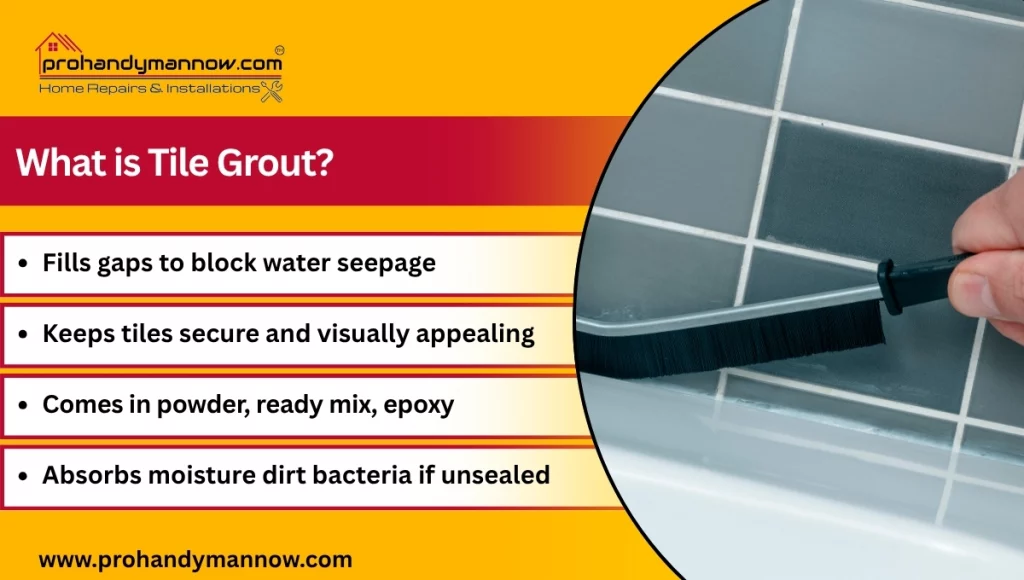
It is a thick paste that helps fill the gap between the spaces between tiles to offer a moisture barrier. When you apply tile grout properly, it helps prevent water from seeping beneath the tiles. Otherwise, this water can lead to mildew and mould.
- A tile grout is effective for holding the tiles in place. Preventing water penetration and improving the overall visual appeal of your tiles.
- You can find a Tile Sealer in various types. Whether you prefer them in powder-based, ready mix, or epoxy grout, multiple options are available.
- Although tiles are usually water-resistant, grout proves essential in numerous ways. But you should know that grout is naturally porous, so it can absorb water, dirt, and bacteria when left unprotected. This porosity is the primary reason that makes grout a breeding ground for mould and mildew over time.
The Science Behind Grout Porosity
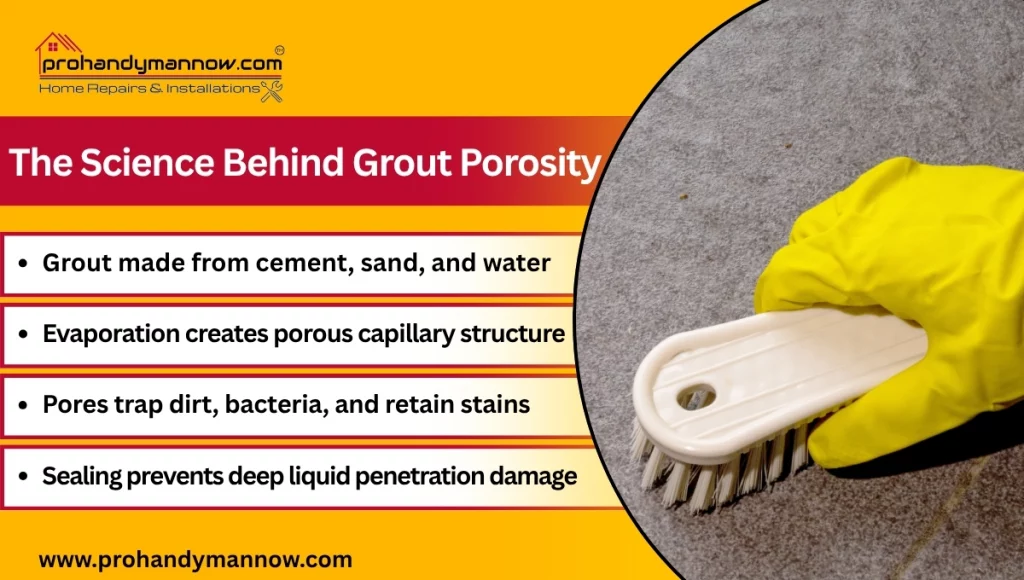
The composition of grout consists of cement, sand, and water. The porous structure is created when water evaporates from the mixture. It leaves behind a series of interconnected capillary channels. These capillary channels trap dirt and bacteria while retaining stains permanently.
Without an adequate porcelain tile and grout sealer, liquids can penetrate deep into the grout lines. That’s why regular cleaning is not enough for maintaining grout health. Using the right sealants and cleaning techniques to avoid the grout lines is necessary.
Understanding Mold Causes and Factors
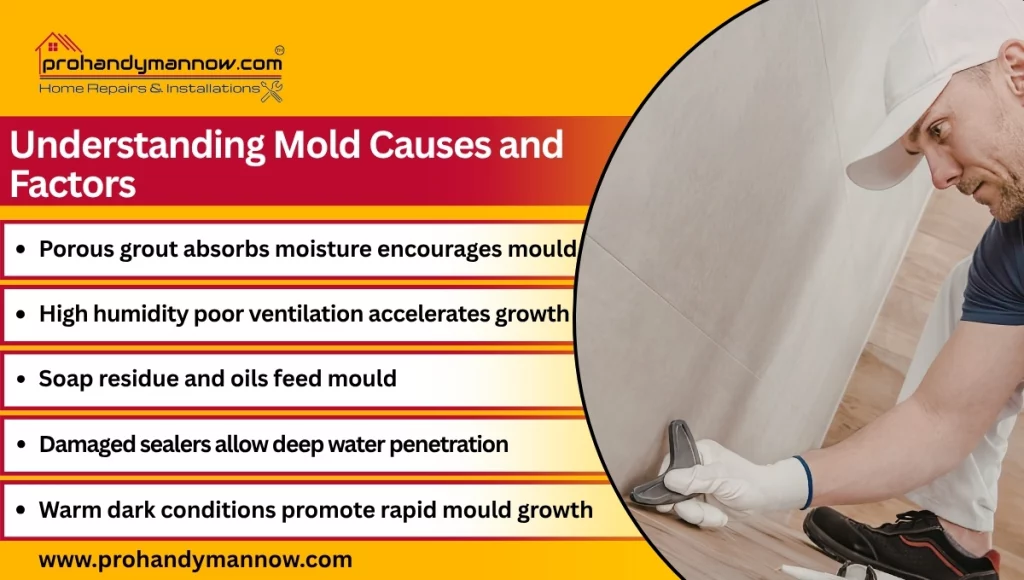
When you’re considering the causes of mould in your kitchen tile grout, understanding the following causes can help.
- Grout is usually porous and popular for its water resistance. It can hold and absorb water, which leads to fungal growth.
- When you live in areas with high humidity levels, and combine them with a poor ventilation system. They create ideal conditions for mould growth.
- Bathroom tile grout increases due to soap scum, body oils, shampoo residue, and skin cells. When they are left on grout, they provide food for mould growth.
- When the grout is improperly sealed or if the sealer is degraded over time, water penetrates deeply. It improves mould growth.
- Different issues like improper surface preparation, cracked grout, gaps in caulk, and incorrect floor sloping. They can cause water to be trapped behind the tiles.
Different factors also increase mould growth, and learning about them is beneficial.
- Warmth from hot showers increases the rapid growth of mould. Intense temperatures are a prominent factor for mould growth.
- When your bathrooms lack sunlight, complete darkness can lead to mould spores. Proper sunlight is necessary for killing them.
- Dirt and dust particles are usually trapped in porous grout. They provide additional food sources for the mould to feed on. Dirty grout is a contributing factor to mould.
What Causes Tile Discolouration?
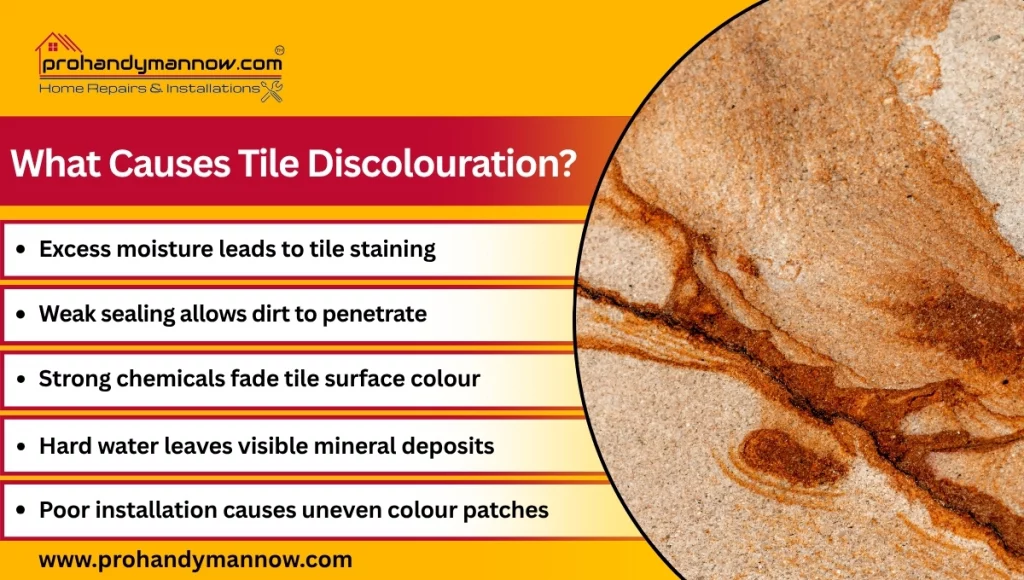
Homeowners can sweep and mop their tiles, but after some time, they can see discolouration in their tiles. It affects the grout and sealant in your tiles, too, leading to further damage. Learning the causes of tile discolouration can help homeowners choose suitable solutions.
- High humidity, warm, and damp environments can trap moisture. It allows the mould and mildew to grow. This can lead to black, brown, and pink streaks on the tiles.
- When you miss, choose an improper or poor grout sealer applicator. This can allow substances like dirt and coffee to enter. This leads to permanent stains on your tiles.
- You can destroy the grout, strip away the sealants, and get uneven tile colours when you choose acidic cleaners. Improper cleaners, bleach, and ammonia are hazardous options for maintaining your tiles’ beauty.
- There are different minerals in hard water which leave white or chalky buildup on the surface. They lead to a discoloured tile appearance.
- Various issues during grout and sealant installation, such as improper mixing, excessive washing, or premature sealant use. They can also lead to tile discolouration.
How to Prevent Tile Discolouration?
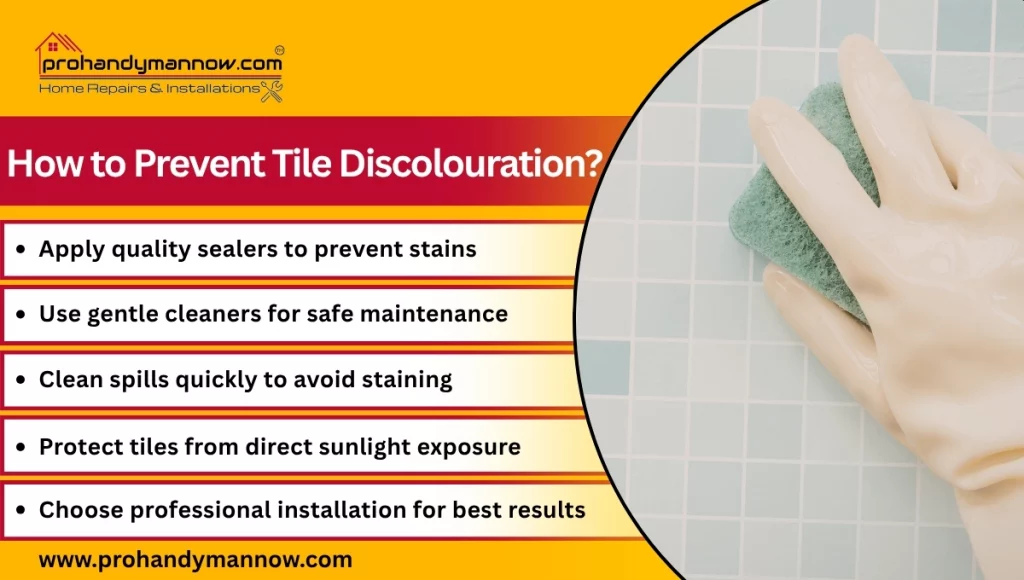
You can maintain the right tile polish in your spaces when you have the right measures to avoid tile discolouration. The following measures can help you avoid such situations.
- Using the best tile and grout sealer helps create a barrier for preventing moisture and stains. From penetrating the grout lines. Although sealants are necessary for traditional cement-based grout, know that modern epoxy tile grout options have built-in protection. It reduces the need for constant resealing.
- Using safe cleaners for regular cleaning of your tiles and ensuring proper ventilation is highly necessary.
- Instantly cleaning spills, whether it’s ketchup or any other liquids, you need to act quickly. Cleaning them quickly reduces the risk of permanent stains.
- For light coloured grout, UV damage is possible. So, protecting your tile grouting and sealing from direct sunlight is suggested. Avoiding harsh cleaning solutions is also vital.
- Using professional installation for tile grouting and sealing is also essential to enjoy long-term functionality.
Why is Proper Tile Layout and Sealing Necessary?

For advanced tile grouting and sealing results, proper tile layout and sealing are necessary. But learning different reasons for this procedure can help homeowners make a wise decision.
- A tile layout and sealing help improve precision. It eliminates guesswork and reduces errors. A proper layout ensures all the tiles are cut professionally and placed accurately.
- You can save time with a proper tile layout and sealing. It speeds up the installation process and reduces the need for adjustments and rework.
- Professional planning helps ensure minimal tiles and other materials wastage. You can save expenses and avoid rework.
- Proper tile layout and sealing are beneficial for improving the overall visual appeal, symmetry, and alignment. You can get a professional look when everything is in order.
- Contractors and designers can also work in a better flow when they have clear structures and blueprints.
- Proper sealing is also vital before tile grouting and sealing for waterproofing the tiles. They help avoid mould formation, ensure stain protection, prevent picture framing, extend sealants’ lifespan, and simplify maintenance.
Types of Tile Grout and Sealers
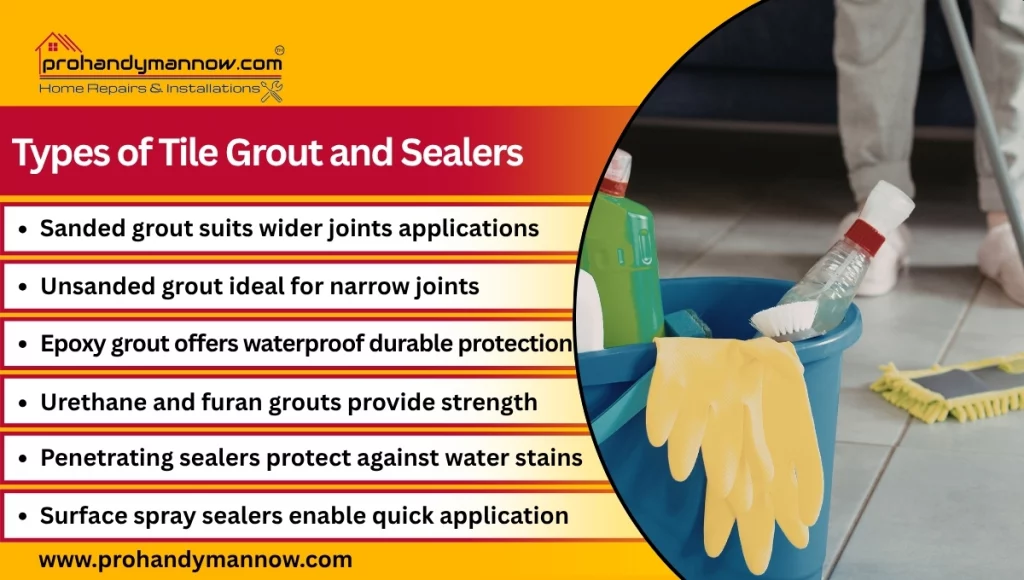
To simplify the application of tile grouting and sealing, learning the types of tile grouts and sealers can help.
-
Tile Grout Types
- Sanded grout contains fine sand. This feature makes it a strong option for floor tiles and joints that are 1/8 inch or wider.
- Unsanded grout is the best option for narrow joints. It is mostly used on walls and delicate tiles.
- Epoxy grout is highly durable, stain-resistant, and waterproof. It is an ideal option for high-moisture areas like kitchens and bathrooms.
- Urethane grout and Furan resin grout are also popular options available in tile grouts.
-
Grout Sealers Types
- Penetrating sealers soak into the grout to provide invisible and breathable protection against water and oil-based stains. These types of grout sealers are effective for showers and natural stones.
- Surface sealers are popular for forming a protective and non-porous layer on top of the grout. They are beneficial for stain protection in dry areas.
- Spray-on sealers are designed for quick applications. They are mostly used in large projects.
- Homeowners also prefer the Miracle Tile Stone and Grout Sealer for tile grouting and sealing.
How Proper Grouting Helps in Mould Prevention?
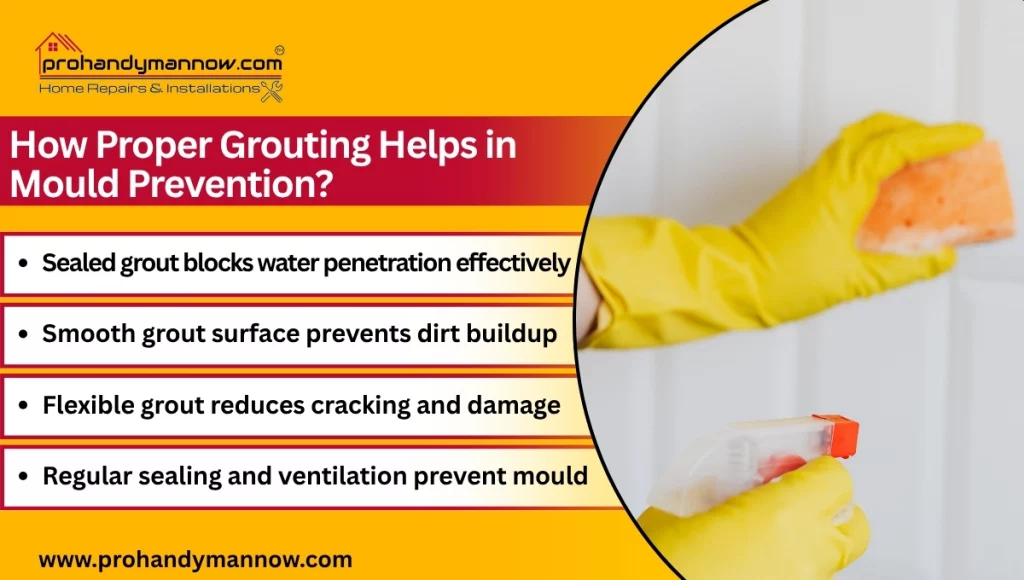
When you have professionally applied grout, it acts as a primary defence against mould. You can benefit from proper grouting in various ways.
- Proper sealing and epoxy grout help create a water-resistant barrier. It proves effective to fill the pores between the tiles to block water from seeping behind them. It helps avoid the formation of mould in the showers and bathrooms.
- Mould feeds on soap scum, dirt, and dead skin cells. Then, they settle into the porous grout. When you have properly applied grout and sealing. It helps get a smooth finish and ensures easy maintenance of your tiles.
- Flexible grout application is beneficial for filling the gaps between the tiles. It also helps avoid structural decay of your grouting.
- Reapplying the sealer after 1-2 years, removing water from tile surfaces with a squeegee after shower, and improving ventilation. These tips can help maintain efficient grouting and avoid mould formation.
How to Grout and Seal Tile?
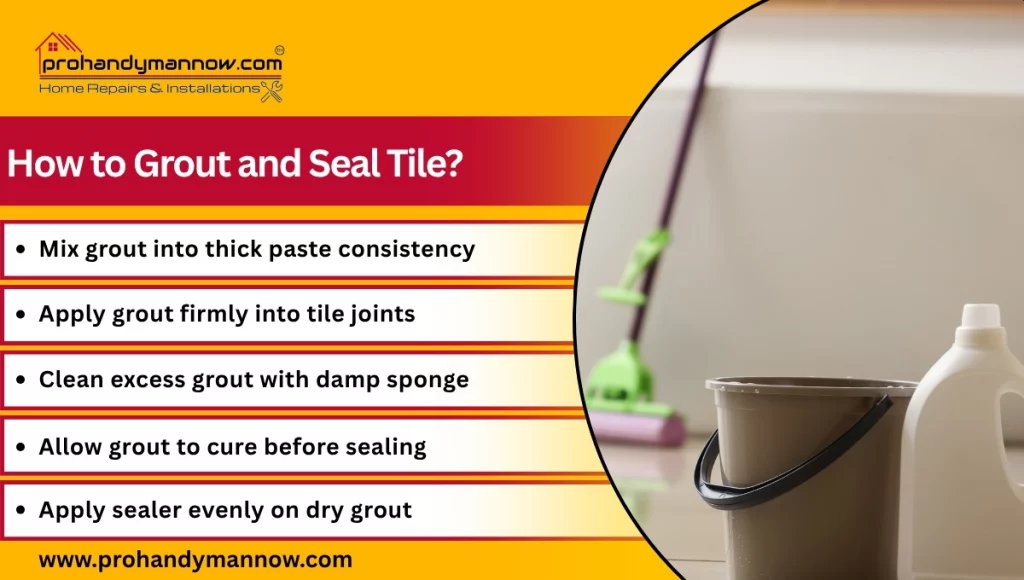
For grouting the tiles, you need to follow the given steps.
- First, prepare the grout by mixing the powder grout with water to get a thick paste-like consistency.
- Then, apply the grout by using a rubber grout to push the grout firmly into the joints. At a 45-degree angle to the tile. Remove the extra grout with the edge of the float. You can also use a professional thin-set mortar for better tile bonding.
- Wait at least 30-60 minutes for the grout to firm up. You can use a damp sponge to wipe the tile in a diagonal motion. Ensure to remove extra grout and shape the joints.
- Once the grout finally dries up and a haze forms, buff the tiles with a clean, dry cloth.
- Then, let the grout cure for 24-72 hours before applying the sealer.
To apply the grout sealer, you need to follow these steps.
- Ensure the grout is properly cleaned and dry. Then, use a small brush, roller, or spray-on applicator, whatever you prefer. Apply a high-quality and well-penetrating grout sealer to the grout lines.
- You need to leave the sealer for 10-15 minutes to let it penetrate the grout.
- Use a clean rug or microfiber cloth to remove extra sealer from the surface of the tiles. Do this step within 15 minutes to avoid sticky buildup.
- You need to apply a second coat of the grout sealer for maximum protection.
- You can test the seal by placing water drops on the grout. They should bead up, which ensures you have done the process accurately.
Get the Best Tile and Grout Sealing Service from ProHandyManNow!

When it comes to plumbing services and professional home repair needs, ProHandyManNow stands out as the best option.
- We ensure long-lasting quality and finishes to maintain your floors’ durability. You can use your tiles for long periods when you choose our services.
- Whether you need tile installation, floor tiling, or wall tiling, you can count on us.
- Ensuring your tile grouting and sealing procedures are properly completed is our duty.
- We can help you maintain the efficiency and visual appeal of your property.
- We consider the specific structure of your spaces and make personalised solutions accordingly.
- Contact us today for further details.
Conclusion
To conclude, tile grouting and sealing are necessary for maintaining the proper functionality and visual appeal of your tiles. But different factors that contribute to this situation enhance mould formation. You can prevent such issues when you know about different factors and causes that can lead to mould buildup. Learning proper solutions and the procedure for sealing and grouting can help homeowners handle these issues better. But professional help is also necessary, so WhatsApp us.
FAQs
Will sealing grout help with mold?
Grout sealing is beneficial for preventing mould growth to a specific extent. It reduces the grout's porosity and makes it less susceptible to moisture absorption.
What is the difference between sealing and grouting?
Improper grouting can make your tiles loose over time and allow the moisture to seep into the subfloor. They can lead to cracks, mould, and even structural instability. In contrast, sealing protects porous surfaces from absorbing stains, water, and harsh cleaning solutions.
What is the main purpose of grouting?
The primary purpose of grouting is to improve the structural formation or to reduce the water flow through it. Grouting is also effective for correcting faults in concrete and masonry structures by filling the gaps, cracks, and voids.
continue reading
Related Posts

Summary: This blog is completely dedicated to all the things

Summary: Garbage disposals can cause trouble when they jam, leak,

Summary: Planning, proper measurements, and secure post placement ensure that