
Summary: Regular garbage disposal maintenance prevents odours, clogs, and costly repairs. Run cold water during and after each use, feed small amounts of food, and keep grease, fibrous vegetables, and bones out. Clean the unit weekly with dish soap and a brush, and use a vinegar solution only for mild odours. Always disconnect power before troubleshooting, and never put your hands inside. If the disposal hums, jams, leaks, or trips the breaker, stop using it and call a professional.
Garbage Disposal Maintenance: Essential Dos, Don’ts, and Cleaning Tips
Clean Garbage Disposal | Garbage Disposal Install | Sink Drain
The garbage disposal is one of the most frequently used appliances in your kitchen. It breaks down leftover food into small pieces that are washed down the drain instead of ending up in your trash can. However, it only works well with regular garbage disposal maintenance, so be sure to make it part of your routine. Otherwise, food particles will build up and start to stink, water will drain slowly and may eventually clog, and even a minor jam can put pressure on the motor. Repairing or replacing a motor costs far more than consistent garbage disposal maintenance.
In this article, you will find useful advice on how to use, clean, and maintain your disposal, as well as issues and signals you should pay attention to.
Short answer: Keep your garbage disposal in good shape by ensuring you turn the water on prior to, during, and after each use, feed it small pieces of food, and avoid introducing any grease, vegetable material, or bone into it. Clean it once a week with dishwashing detergent and a brush, and always make sure that it is unplugged when troubleshooting it.
Why Garbage Disposal Maintenance Matters
The disposal unit is situated right beneath the kitchen sink, where it goes unnoticed until problems occur. This is the reason why you should do routine checks on it.
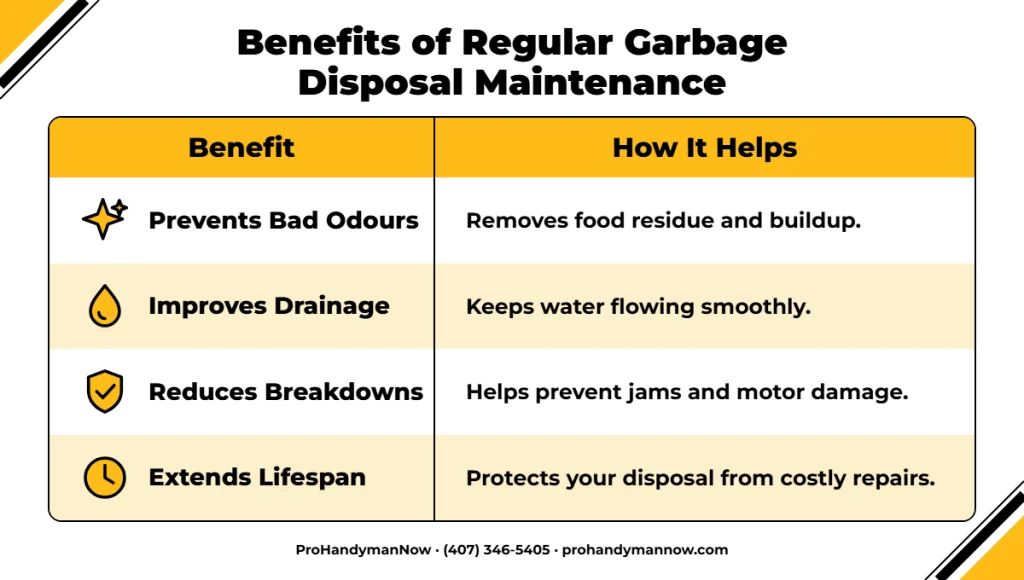
Here is what regular maintenance does for you:
- Removes odour. A clean surface and a clean compartment do not allow the food scraps to decompose, causing bad odour.
- Maintains efficient drainage. Allowing the unit to run smoothly will help drain the debris effectively, leaving no traces of waste behind.
- Makes breakdowns few and far between. Using the unit properly reduces the risks of jams and placing a load on the motor of the machine.
It is similar to changing the filter for your furnace. With a little bit of effort, you can protect an expensive piece of equipment from any damage. If you also need help with your sink or disposal, our general repair services cover plumbing repairs, including installing and repairing garbage disposals.
Garbage Disposal Dos: Daily Habits That Protect Your Unit
These Garbage Disposal Dos take only seconds, yet they make the biggest difference.
Run Cold Water Before, During, and After
Keep cold water running while the disposal grinds and for 15 to 30 seconds afterwards. This flushes the waste away and keeps fats from melting and coating the pipes.
Feed Food Waste in Small Amounts
Add scraps a handful at a time. Overloading the chamber strains the motor and can cause a jam.
Clean the Unit Regularly
Give the unit a quick clean every week. This stops residue from building up and causing odours.
Follow the Manufacturer’s Instructions.
Your manual lists what the unit can handle and how long to run it. It also tells you which cleaners are safe to use.
Build Healthy Garbage Disposal Habits
Scrape plates into the trash first and cut large scraps into smaller pieces. If the sound of the unit changes, turn it off and find out why.
Garbage Disposal Don’ts: What Should You Avoid?
The garbage disposal is not a trash can. There are materials that may clog the drain, dull the blades or overwork the motor. The types of waste accepted vary from one type to another, so make sure you check the manual if you are in doubt.
- Grease and cooking oil: They harden in pipes and cause clogs. Dispose of them in the trash.
- Fibrous vegetables: Celery, corn husks, and onion skins can wrap around grinding parts.
- Large bones: They can jam the disposal and damage the unit.
- Too much food: Large amounts can overload the motor and clog the drain.
- Starchy foods: Excess pasta, rice, and potato peels can form a thick paste.
- Non-food items: Keep plastic, metal, glass, and paper out of the disposal.
- Coffee grounds and eggshells: Large amounts can build up in pipes and cause clogs.
When in doubt, throw it out or compost it. A few seconds of sorting protects your disposal and your plumbing.
How to Clean a Garbage Disposal Properly
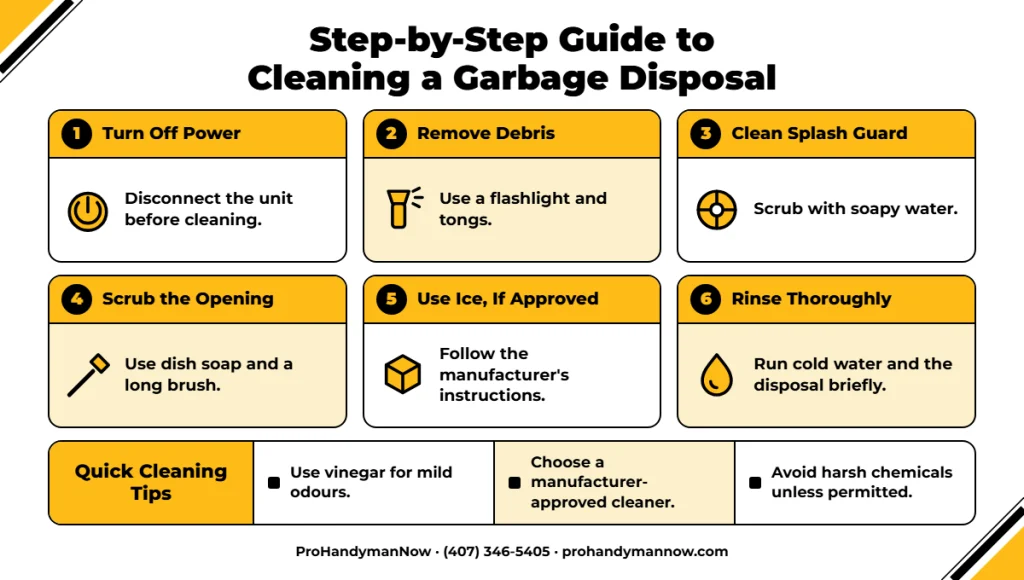
| Step | Action | How to Do It |
| 1 | Turn the disposal off. | Switch off the wall switch. For extra safety, unplug the unit under the sink or switch off its breaker. |
| 2 | Look for visible debris. | Use a flashlight. Never put your hand into the disposal. If something is stuck and you can see it, remove it with long tongs or pliers. |
| 3 | Clean the rubber splash guard. | Scrub both sides with an old toothbrush and warm, soapy water. This is where much of the odour hides. |
| 4 | Use dish soap and a brush. | Add a small amount of dish soap, then scrub the visible areas around the opening with a long-handled brush. Flush with cold water. |
| 5 | Try ice if your manual allows it. | Some manufacturers approve a cup of ice cubes, sometimes with coarse salt, to knock loose residue from the chamber. Check your manual first. |
| 6 | Rinse well. | Restore power, run cold water, and switch the disposal on for a few seconds. |
When a Vinegar Solution Helps
White vinegar can help reduce mild odours. Pour a small amount down the drain, wait briefly, and flush with cold water. However, vinegar cannot remove heavy buildup, unclog the disposal, or fix mechanical problems.
Choosing a Garbage Disposal Cleaner
A commercial garbage disposal cleaner can make routine cleaning easier. Choose one recommended by the manufacturer and check the product label before use. Avoid harsh chemicals that may damage the unit or pipes.
Common Garbage Disposal Problems and Their Causes
Most garbage disposal problems fall into a few familiar categories. Knowing the likely cause helps you decide whether it is a quick fix or a job for a professional.
Garbage Disposal Humming and Slow Drainage
Humming but not grinding in a garbage disposal means that the motor has power, but it is blocked somewhere inside. The blockage can be due to some tough or fibrous substance or sometimes due to an old motor. One of the most common problems experienced is slow draining, which is caused by a build-up of food in the drain.
Garbage Disposal Smells, Leaks, and Unusual Noises
Bad smells usually come from food residue inside the disposal, while persistent odours may indicate a deeper drain issue. Leaks can result from loose connections or worn seals, and cracks may require repair or replacement. Rattling noises often mean something is stuck inside the unit.
Disposal Does Not Turn On
Check the reset button, circuit breaker, and power supply. If the unit remains silent, there may be an electrical fault.
Minor odours and slow drains often need maintenance, while repeated jams, leaks, and electrical issues may require professional help.
How to Fix a Garbage Disposal: Troubleshooting Tips
If you want to know how to repair a garbage disposal, then begin with the basics that don’t require any equipment and are also safe to perform.
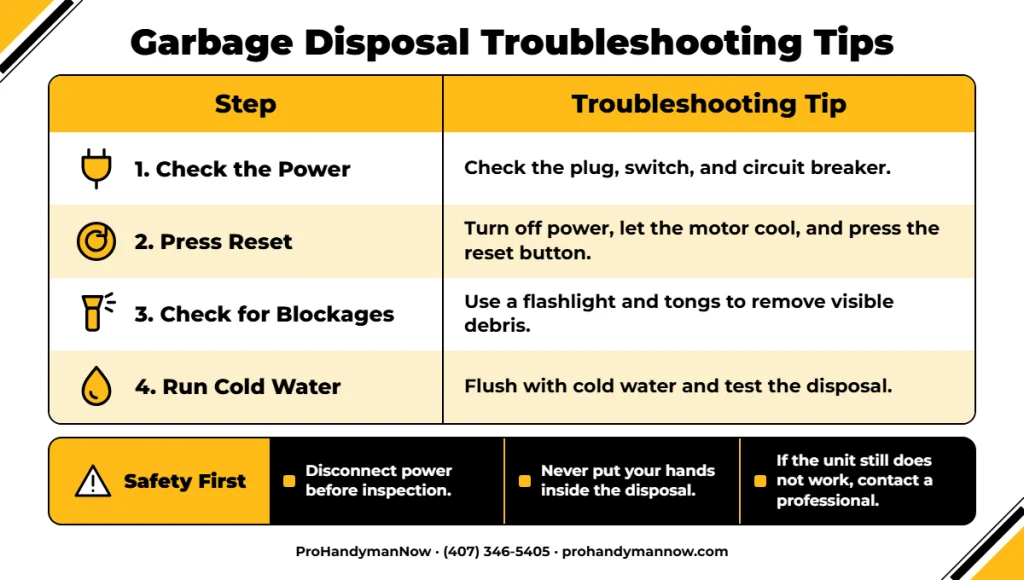
Safety first: Always unplug the unit before conducting any inspection or working around it. Turn off the wall switch and unplug the disposal or turn off its breaker. Do not place your hands or fingers inside the disposal, and do not stick your hands into the grinding chamber of the disposal.
- Check the power: Ensure the unit is plugged in, the switch is on, and the circuit breaker is working.
- Press the reset button: Turn off the power, let the motor cool, and press the reset button.
- Check for clogs: Use a flashlight to inspect the drain and remove visible debris with tongs, never your hands.
- Run cold water: Turn on cold water and test the disposal again.
How to Unclog a Garbage Disposal and Sink Drain
Knowing how to unclog garbage disposal problems starts with finding where the blockage sits. If the clog turns out to be in your sink plumbing rather than the disposal, our plumbing fixture installation guide explains how the drain, P-trap, and kitchen fixtures connect.
Disposal Clog or Drain Clog?
Turn on the water and see what happens. If there is humming or the disposal won’t grind, then the problem lies with the garbage disposal. If the disposal is working fine but the water is draining slowly or backing up, then there is a clog in the sink drain or beyond that point. If both the sinks in a double sink become full or the other drains in your home are slow as well, then you could have a more severe plumbing problem.
Safe Initial Checks
- Turn off the disposal and unplug it.
- Inspect it with a flashlight to see if there are any objects that can be removed with tongs.
- Empty the sink of standing water if possible, using a cup.
- Pour a little bit of water into the disposal to see if it helps.
Using a Plunger
The plunger is helpful in the event that your drain problem is beyond the garbage disposal. You need to use a sink plunger as opposed to the toilet one. In the case of a double basin, the other side needs to be blocked using a rag or the plug. Avoid using the garbage disposal.
Avoid Chemical Drain Cleaners
Never put any chemicals down the disposal unless it is explicitly stated on the disposal itself and on the label of the product that you are allowed to do so.
When To Call the Professional
If the blockage persists, you have more than one blocked fixture, or if the problem is not resolved by plunging, contact a professional plumber. The professional drain cleaning will reach blockages that a layperson cannot get at.
Garbage Disposal Maintenance Checklist
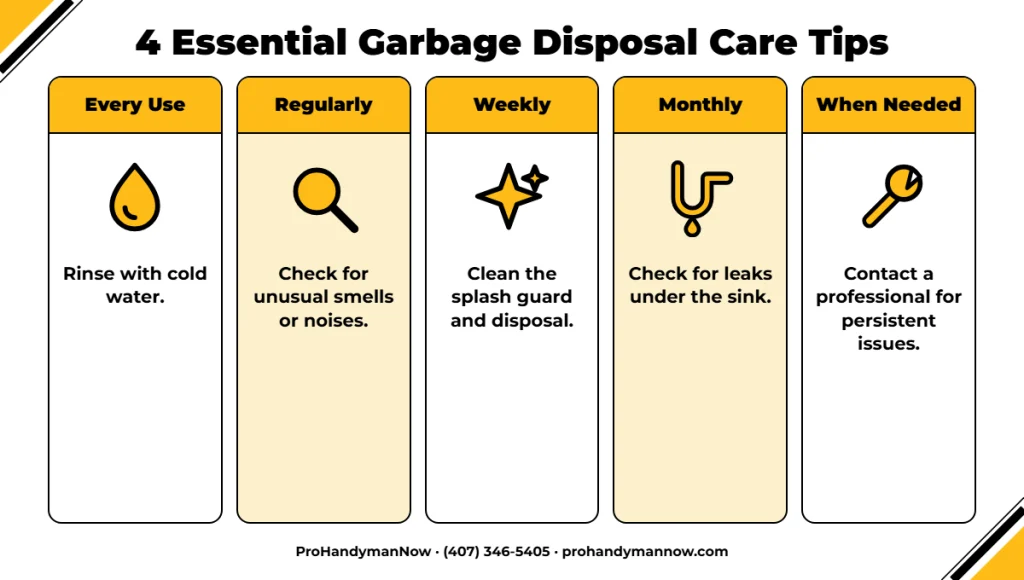
A basic routine will help you stay on track. Take the following time frame as a reference. Manufacturer’s guidelines always come first. If you would rather not handle upkeep yourself, our property maintenance services can take care of routine home maintenance for you.
| Maintenance Task | Frequency | Purpose |
| Rinse with cold water. | Every use | Flushes away waste |
| Check for odd smells or sounds. | Regularly | Detects problems early |
| Clean the splash guard. | Weekly | Prevents odours |
| Clean the disposal. | Weekly | Removes food buildup |
| Check for leaks. | Monthly | Prevents damage |
When to Repair or Replace a Broken Garbage Disposal
Some problems fix themselves with a reset or a good cleaning. Others need professional attention.
When a Reset or Deep Clean Can Solve the Problem
A jammed machine, faulty reset button, or unusual odour typically demands the safety measures outlined above. If the unit functions fine after that, continue your normal maintenance procedure.
Signs You Need Repair or Replacement
Maybe it is high time you repair damaged components of your disposal or replace it entirely, taking into account all those signs such as leakage or jams.
Other Warning Signs of a Failing Disposal
Repeated jams mean that the blades or the motor are worn out. A humming sound, overheating, or lack of reaction after the reset means that there is some problem with the motor. In addition, a grinding noise or tripping the breaker or the reset switch can mean that the inner components are worn out. The lifespan of each unit differs depending on its model and how often it is used. Thus, in case of an old unit with repeated jams, replacing is more cost-efficient than fixing.
When to Call a Plumber
If you see any of these signs, consider Plumber Garbage Disposal Repair. A professional can safely inspect the electrical connection, the motor, and the plumbing and advise whether repair or replacement makes sense. Our plumbing fixtures service covers garbage disposal repair, replacement, and installation.
A local plumber is also the right call when the trouble is not the disposal itself. Backups in several drains, recurring clogs, or leaks from the pipes below the sink often point to a larger drain or plumbing issue that needs the right tools and experience.
Garbage Disposal Dos and Don’ts at a Glance
Use this quick comparison as a reminder at the kitchen sink
| Dos | Don’ts |
| Use cold water during operation. | Run without water. |
| Add food waste in small amounts. | Overfill the unit. |
| Clean the disposal regularly. | Pour grease down the drain. |
| Disconnect power before inspection. | Put hands inside the unit. |
| Follow manufacturer instructions. | Ignore leaks or unusual noises. |
How ProHandymanNow Helps with Garbage Disposal and Sink Problems
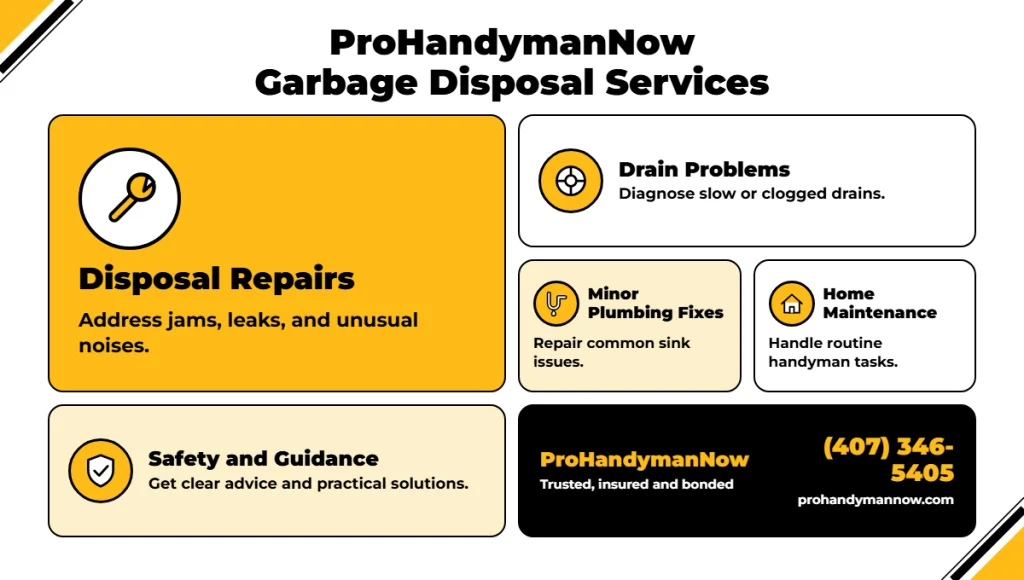
ProHandymanNow offers its help to homeowners when it comes to handyman and plumbing services. For instance, it concerns issues with the sink drain pipe or garbage disposal. It is essential to pay attention to the need for proper communication, safety, and understanding of the problem on behalf of the customer in order to know what steps should be taken next. If the work can be done by the client independently, we will inform him/her about it. In case it cannot, we will try to find the right solution to the problem.
How ProHandymanNow Can Help You
- Drain issues. Finding out the cause of slow or clogged drains.
- Problems with disposal. Making noises, getting jammed, leaking.
- Minor fixes. Small plumbing and sink fixes.
- Maintenance work. Handyman services in the home.
- Understanding and safety. Clear instructions, safety first, and making your decision easier.
Conclusion:
Regular maintenance of the garbage disposal is the most efficient way to prevent smells, clogs, and expensive repairs. Use cold water, run in small quantities, and avoid feeding grease and fibrous food remnants, and maintain the machine on schedule. In case of problems, disconnect the power supply, troubleshoot safely, and never reach into the machine with your hands.
Observe all do’s and don’ts presented in the guide and follow the maintenance schedule to keep everything under control. In case you spot leaks, frequent jamming, humming, or electrical issues, stop using the machine and contact a professional.
Need assistance with your garbage disposal, kitchen sink, or other home maintenance? Contact us, and we will help you choose the next steps.
Frequently Asked Questions
How often should you clean a garbage disposal?
Clean the splash guard and opening weekly with dish soap and a long-handled brush. Do a deeper clean monthly with a manufacturer-approved cleaner or ice, and check your manual first.
Why is my garbage disposal humming but not grinding?
Humming means something is jamming the disposal. Unplug it, remove any visible object with tongs, and press reset after it cools. If it keeps humming, call a pro.
Can you put coffee grounds or eggshells down a garbage disposal?
Avoid them if you can. Small amounts may be fine for some units, but larger amounts build up and clog pipes. Trash or compost them instead.
continue reading
Related Posts

The Complete Guide to Window Screen Repair & Maintenance Window
Summary: This article covers practical dishwasher maintenance, including daily and

Even small changes matter to make your space noticeable. Light