
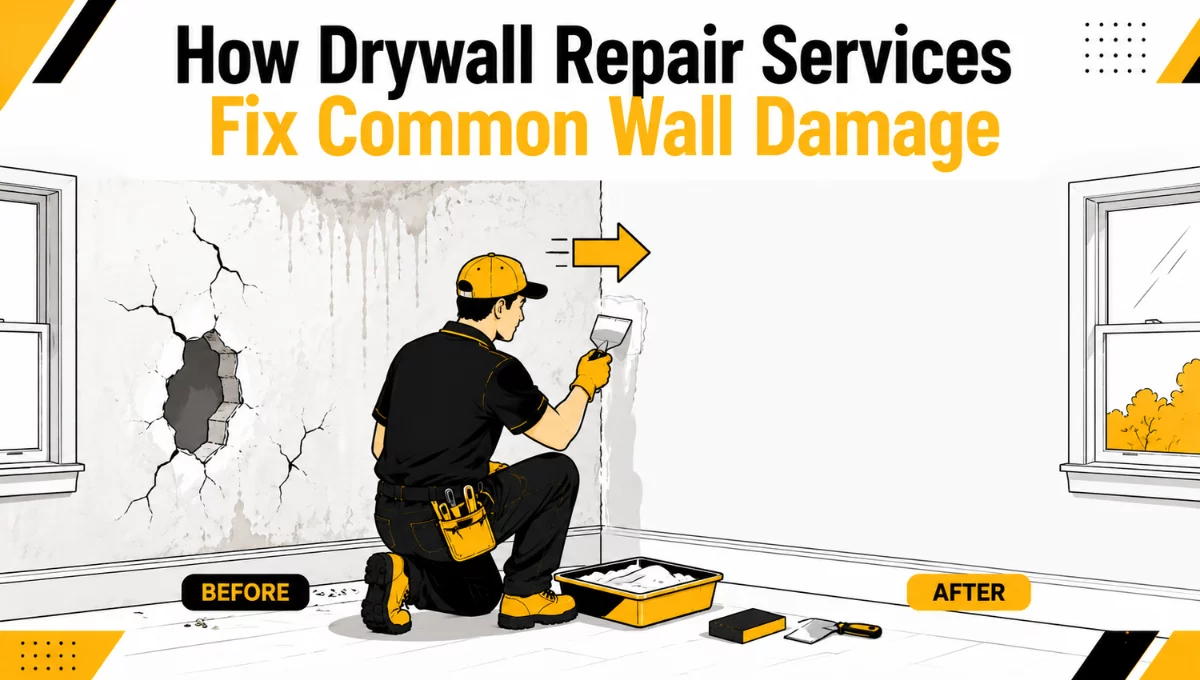
Summary: Drywall repair professionals use the appropriate patching, sanding, texture, reinforcement, painting, and priming techniques to repair pops, cracks, water damage, loose tape, and damaged corners and drywall seam tape. With their expertise, they will know and repair the long-lasting cause of the damage, and the repaired drywall will be at the same height and alignment as the surrounding drywall.
Why Are Drywall Repair Services the Best Solution for Damaged Walls?
Drywall Repair Cost | How to Fix Drywall Holes? | How to Fix Drywall Cracks?
Drywall is typically easy to install and provides an aesthetically appealing finished surface for most decors or functions. It’s become a dominant choice to enclose spaces in a building.
Drywall does have major weaknesses. Furniture that is carelessly moved, plumbing that carelessly leaks, or fixtures that are improperly affixed to the wall will cause damage to a wall. Some of this is unavoidable. Patching or finishing small holes is common and typically easy to do yourself, but for water damage, major cracks or breaks, it’s best to bring in a professional.
Drywall repair services utilize specialized tools, materials, and techniques to repair damage to walls and permanent structures. Unlike traditional mending techniques, drywall repair services assess the damage and cause of the damage, repair the weakness, texture match, and surface prep for painting.
What Is Drywall?
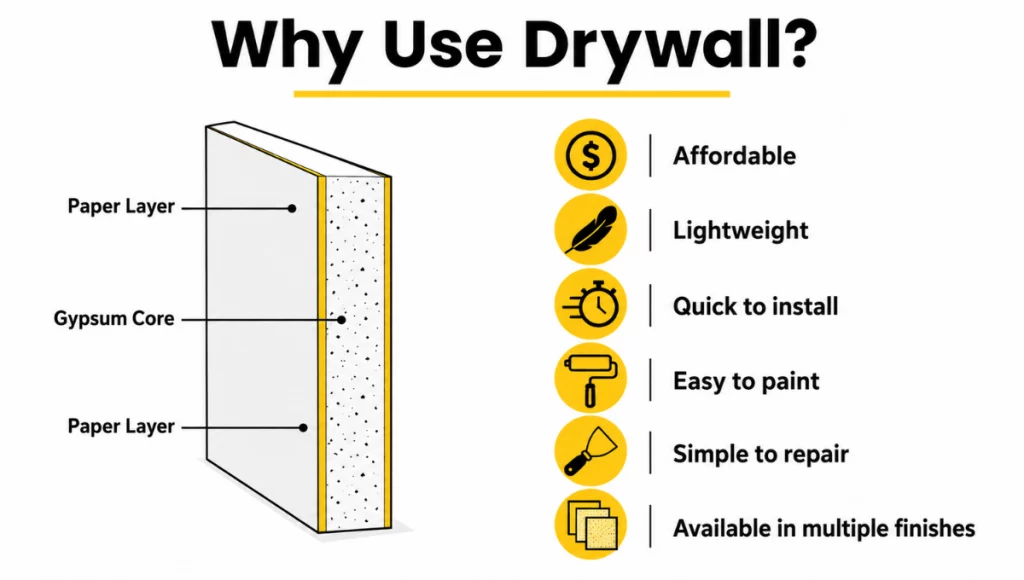
Drywall is a popular building material used for finishing interior walls and ceilings. Made of a core of gypsum and covered in layers of paper, drywall is lightweight and relatively easy to work with compared to other wall construction options. Drywall is also referred to by a variety of names, including:
- Plasterboard
- Gypsum board
- Wallboard
- Sheetrock
- Gypsum panel
Drywall ceiling repair is a common material choice for construction because it meets several different needs. Most importantly, drywall is relatively inexpensive and can be finished in a multitude of styles.
What Causes Drywall Damage?
Drywall can be damaged in a variety of ways. Problems can be as insignificant as a small scratch on the surface or as serious as a leak. Damage can also be the result of structural movement or damage that cannot be seen. The common causes of drywall damage are following:
- A hard hit by a piece of furniture
- Accidental opening of a door
- Hanging decorative items
- Removing shelves
- Splitting cabinets
- Leaking pipes
- Leaking through the roof
- High levels of humidity indoors
- Accidental damage
- Poor construction
- Damage to the foundation
- Leaks
- Infestation of pests
Repairing damage to drywall does not usually happen until the cause of the damage is discovered. If damage is only repaired on the surface without the cause of the damage being repaired, the result will not be a permanent solution. It’s essential to identify the types of drywall damage (i.e., nail pops, water stains, cracks, holes) to select the most appropriate for drywall repair.
How Does a Professional Drywall Repair Company Inspect Drywall Damage?
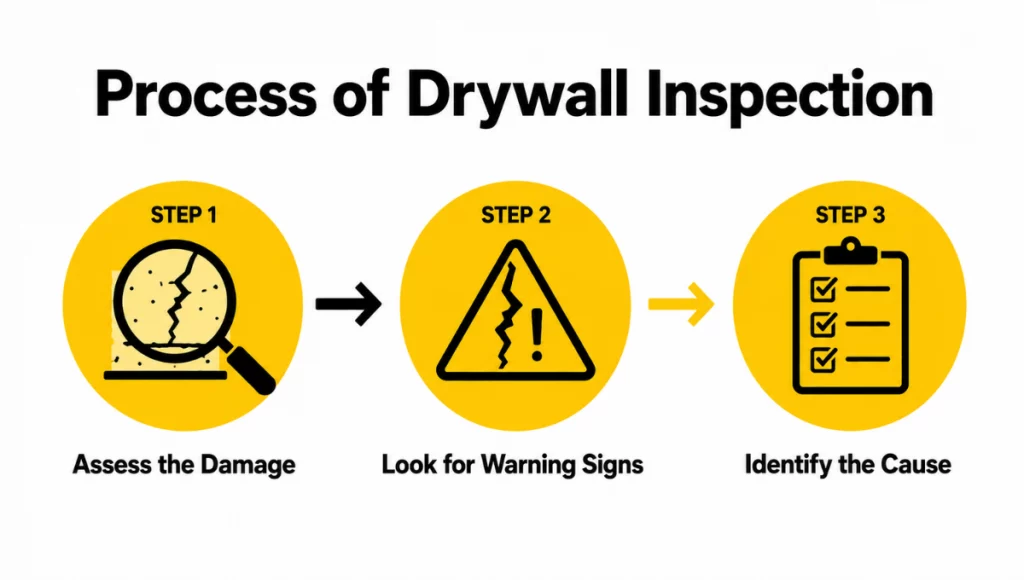
The first stage of drywall repair is an inspection. The drywall contractor near me will evaluate the size, placement, depth, and general condition of the damage. This generally involves looking for:
- Loose drywall paper
- Swollen or soft areas
- Water stains
- Mold
- Cracks around the frames of doors or windows
- Loose tape on joints
- Damaged tape accents
- Sagging areas
- Nail pops or other symptoms that are recurring
From this, the residential drywall contractors will be able to decide how to best repair the damage, whether it is going to be short and simple and just need to be filled, or whether it requires drywall patch repair or a large portion of the drywall be replaced.
For example, a small hole made by a nail may only need to be filled, sanded, and painted. On the other hand, impact damage that has a large void may need a new drywall panel with support backing installed. The drywall repair cost per square foot is influenced by the size of the damage, the materials needed, the texture of the wall, labor, and painting requirements.
Repairing Small Nail and Screw Holes
Holes left by nails and screws can be fixed using a joint compound or a spackling paste. The technician cleans the surface, applies the filler, and smooths it. After the filler dries, the technician sands, primes, and paints the surface. The drywall hole repair process may be repeated if the filler shrinks and leaves a gap.
Fixing Dents and Surface Damage
Drywall dents can be caused by impacts from furniture, tools, toys and other objects. The joint compound is used to fill the damaged area. Drywall dent repair includes each application of the compound extending a little further beyond the opening.
Repairing Small and Medium-Sized Holes
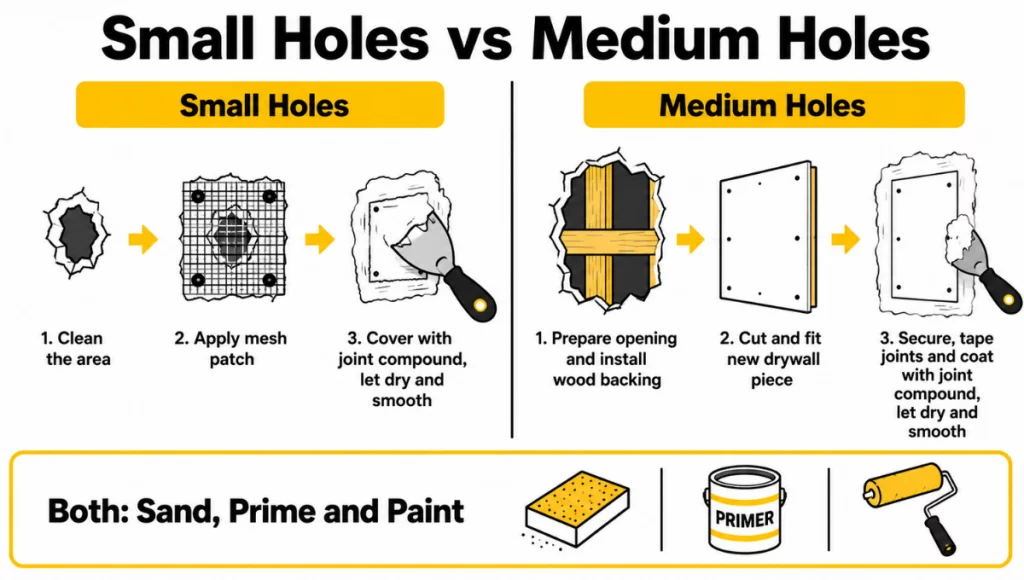
Thin self-adhesive mesh can be used to cover small holes and several applications of joint compound. For medium-sized holes, a section of drywall can be removed and replaced. This new section can be supported by wooden strips. The surface can be finished with a joint compound, sanded, primed, and painted.
Restoring Large Drywall Holes
Large holes can be caused by impacts, plumbing and remodeling. A drywall section can be removed and replaced. The new section can be supported by a stud system of some sort. The damaged area can be finished with sanded, primed, and painted.
Fixing Drywall Cracks
Cracks can be caused in the corners and seams of drywall. The old tape and the loose joint compound can be removed, and a new tape and several layers of joint compound can be applied. Frequent cracks can be an indication of structural problems.
Repairing Nail Pops
When fasteners move underneath drywall, raised bumps or circular cracks appear. This is referred to as a nail pop. The drywall crack repair involves adding more screws in the vicinity of the loose fasteners. Subsequently, the area is sanded, primed, and painted over along with the new screw heads.
Restoring Water-Damaged Drywall
Damaged drywall can swell, soften, and sag and may even have mold or a bad smell. The source of the water issue must be fixed prior to any drywall removal. The wall space is dried, and new drywall is installed when it comes to drywall water damage repair. The newest layer is painted and primed with a paint that blocks stains.
Repairing Damaged Drywall Corners
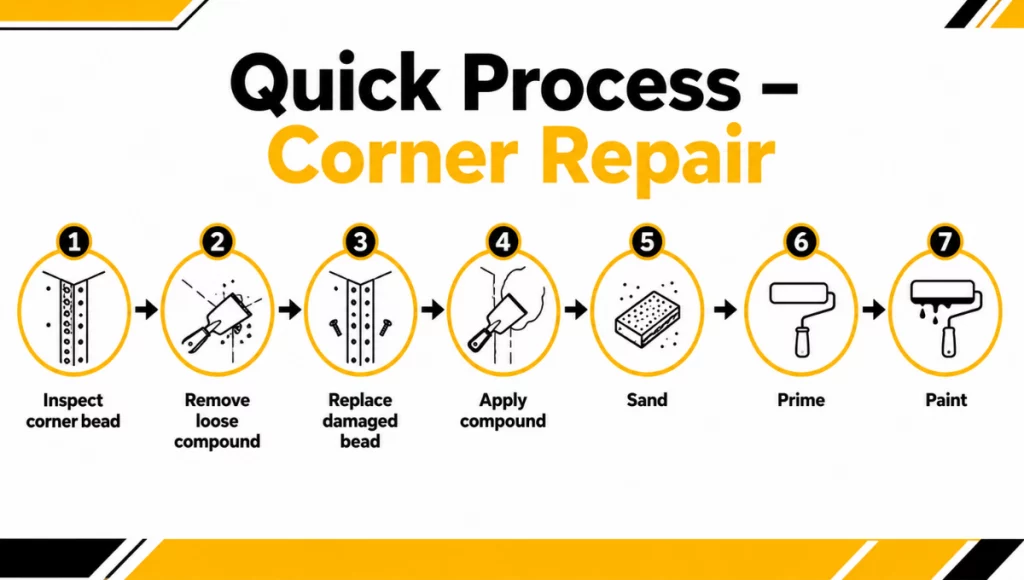
Outside corners can be damaged by the impacts caused by furniture and luggage. If the corner bead is still secure, loose joint compound can be replaced by a commercial handyman. Straight edges can only be restored if damaged corner beads are removed and replaced and then are coated with joint compound, sanded, primed, and painted.
Reattaching Loose Drywall Tape
Drywall tape may crack, loosen, or bubble due to moisture, movement, or improper installation. Professional drywall repair experts remove the damaged tape and reinstall new tape using the drywall mud. Several coats are applied and then sanded and finished to a seamless surface.
Matching the Existing Wall Texture
The home repair services must include matching the surrounding section of the wall as closely as possible. There are many different styles when it comes to wall finishes, including orange peel, knockdown, stipple, swirl, sand texture, and smooth coatings. The drywall repair service near me includes specialized tools in combination with rollers, brushes, and spray equipment to recreate finishes.
Priming and Painting the Repaired Wall
Primer fills in the joint compound and helps paint stick, while preventing absorption issues and flashing. The paint that is most similar is used after the primer. If the wall is hard to match or paint, then the whole wall is painted. Professional drywall repair and painting replaces damaged sections of drywall and provides a smooth, clean, and flawless finish to the entire wall.
Benefits of Hiring Professional Drywall Repair Services
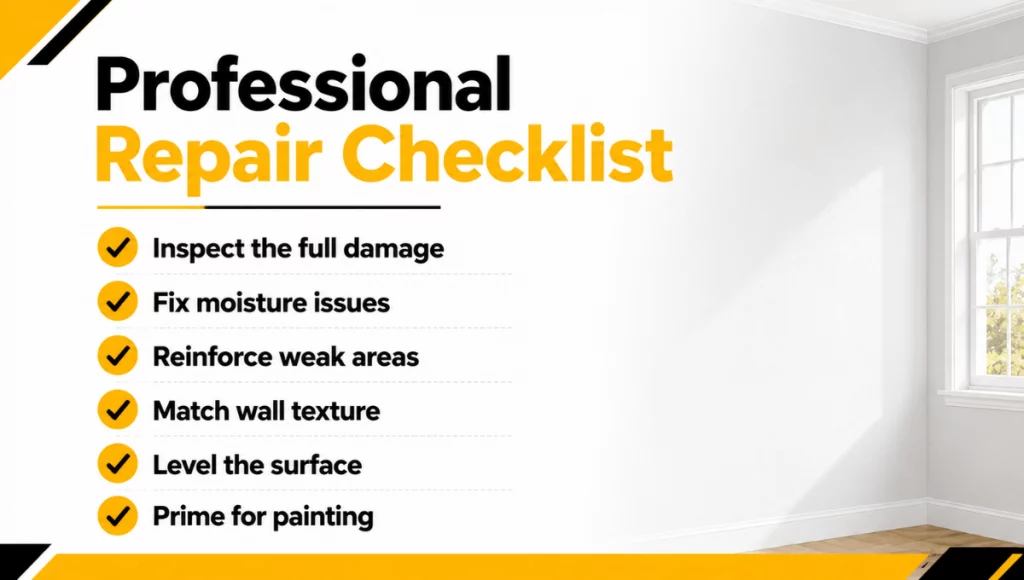
A long-lasting, seamless, and professional result is to be expected with professional drywall repair services compared to temporary, do-it-yourself drywall patch services. Consider these benefits of professional drywall repair:
- Assessment of the full range of damage
- Long-lasting and seamless results
- Correct reinforcement of the drywall
- Wall finishes that are level with the repair
- A seamless match in wall textures
- Treatment for underlying moisture issues
- A lower instance of returning damage
- An even surface after repair
- Drywall primed for paint
- Little to no cleanup after repair
- A quicker turnaround time for completion
Commercial drywall contractors also know when damage may be caused by plumbing, moisture, or structural issues. Professional drywall taping and mudding create smooth, seamless joints and prepare walls for priming and painting.
How to Prevent Future Drywall Damage?
While some drywall imperfections simply cannot be helped, you can take steps to lessen the chance of problems. Here are some tips you can use:
- Position doorknobs so they do not touch the drywall
- Use wall anchors
- Do not hang heavy items if you do not know if a stud is present
- Fix plumbing leaks as soon as possible
- Vent to the outside if air is damp
- Control the indoor humidity
- Be careful moving furniture around
- Check water stains on walls
- Do not push furniture against walls
- Use corner guards if you are worried about people bumping into your walls
- Look at your walls to see if there are any problems
Minor cracks and marks can be signs of bigger problems. The home repair contractors can pay attention to signs of loose drywall tape, moisture marks, and small cracks.
ProHandymanNow– Dependable Handyman Solutions for Every Property
ProHandymanNow offers handyman services across Florida. We serve homeowners and rental property managers. Our team is licensed, insured, and experienced, and ready for anything from repair and maintenance to full installations. Our services have rapid response times and give you a transparent price. We believe our customers deserve the best handyman service, and we deliver with passion.
Conclusion
With the help of drywall repair techniques, you can begin the repair process by assessing the problem and identifying weak drywall material and damaged surfaces. Then the wall is restored, and surfaces are completed. Depending on the damage done, the technician may use a number of water damage repair tips for the drywall. Small holes may be filled, patches may be installed, sections may be replaced, cracks may be repaired, pops may be secured, corners may be restored, and tape may be replaced. Also, damaged material may be completely removed.
The process is completed when the wall is sanded down. Texture matching is done along with a fresh coat of primer and paint. This important process is key to ensuring that the repaired area is not only completed but is integrated into the repair as one surface. Contact us today for fast, dependable handyman services in Orlando and across Florida; no job is too big or too small.
continue reading
Related Posts

Blog Summary: When the proper sizing and style are chosen,

Summary: Choosing the best washer and dryer starts with your

Summary: A complete walkthrough of what it takes to set